Star-gazer, Tsunami Zone
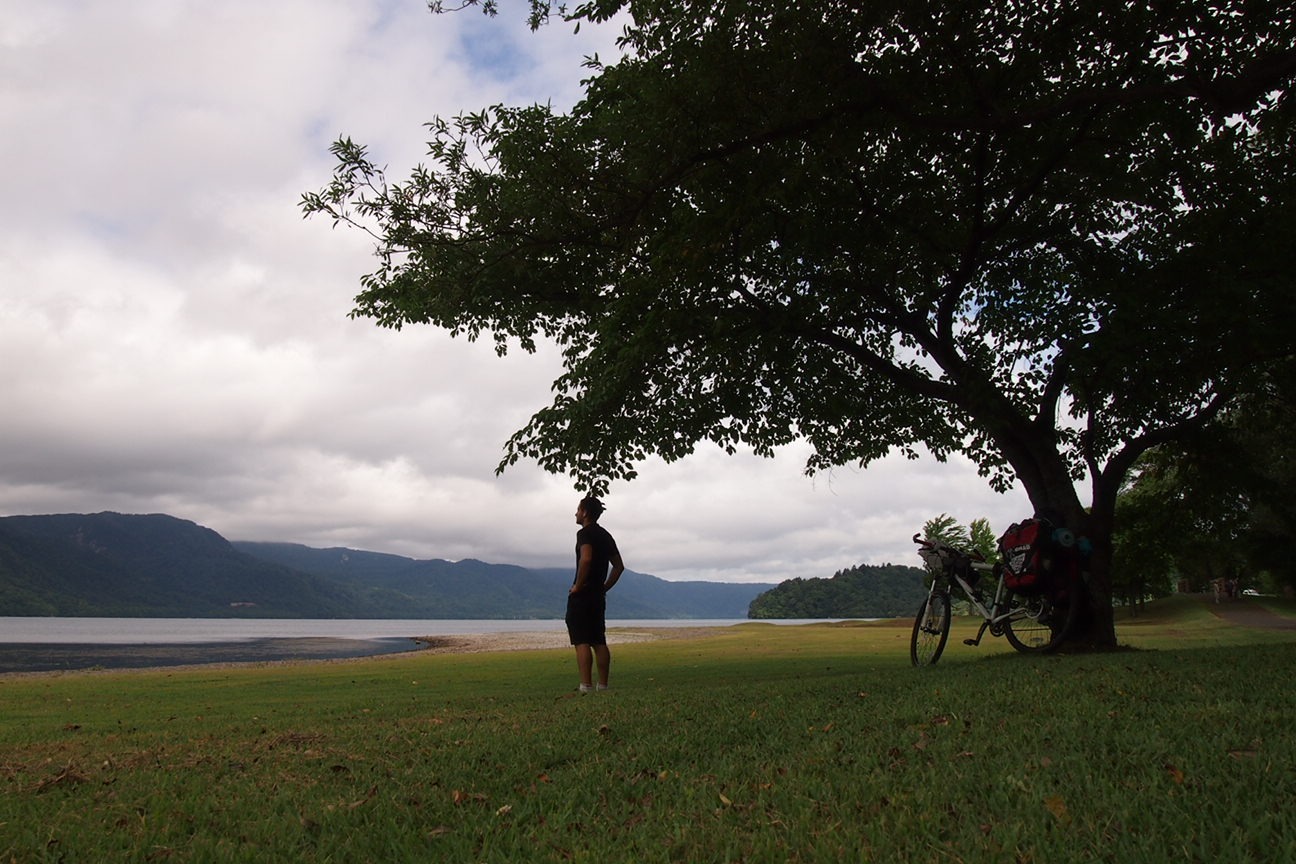
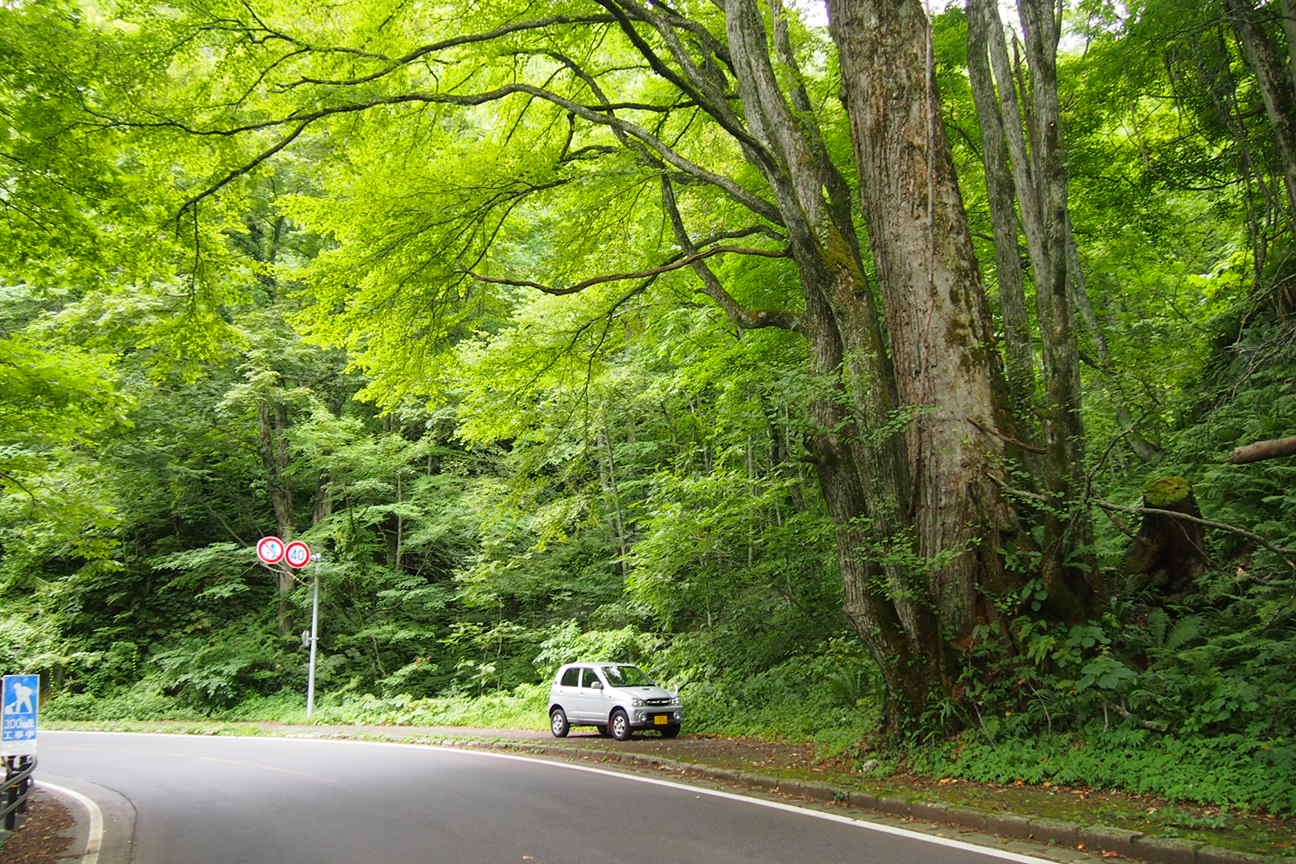
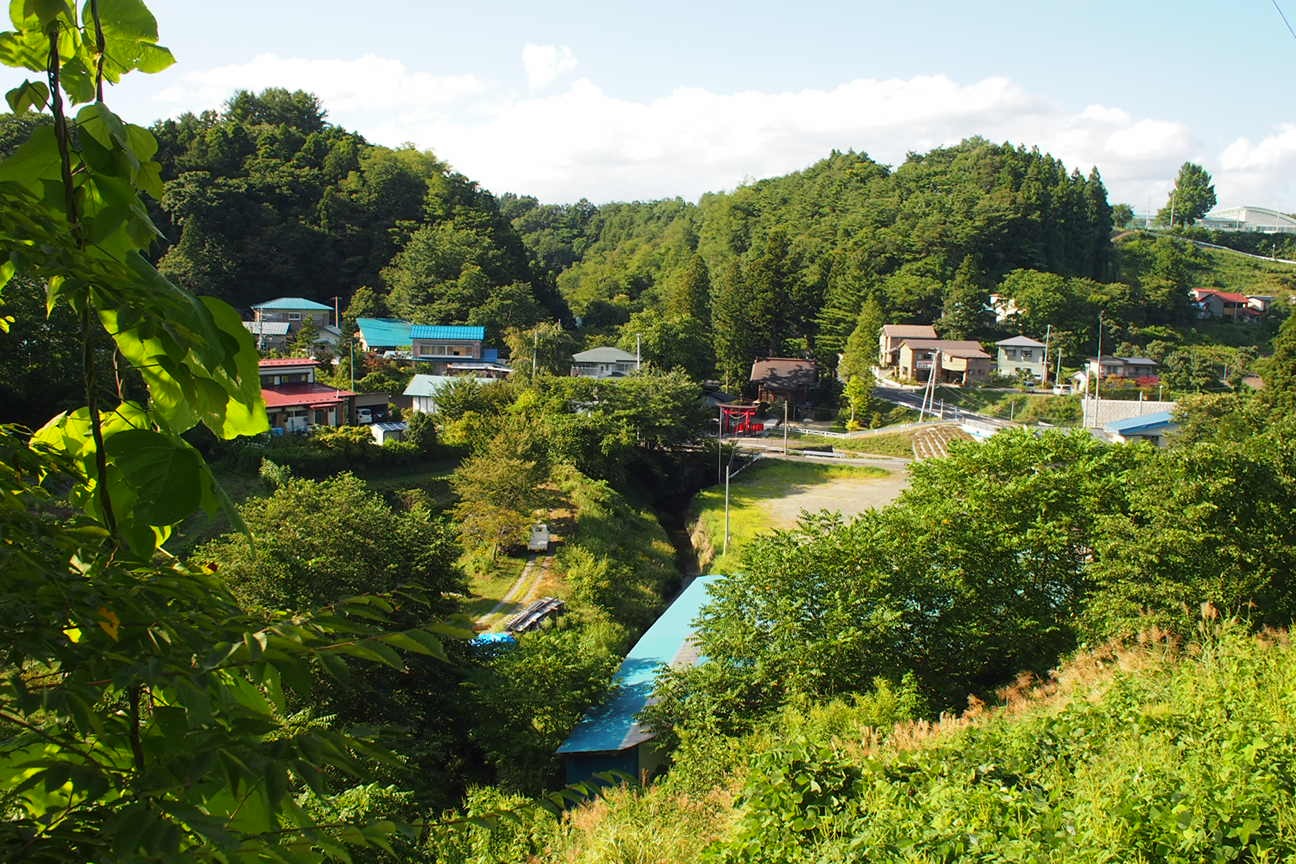
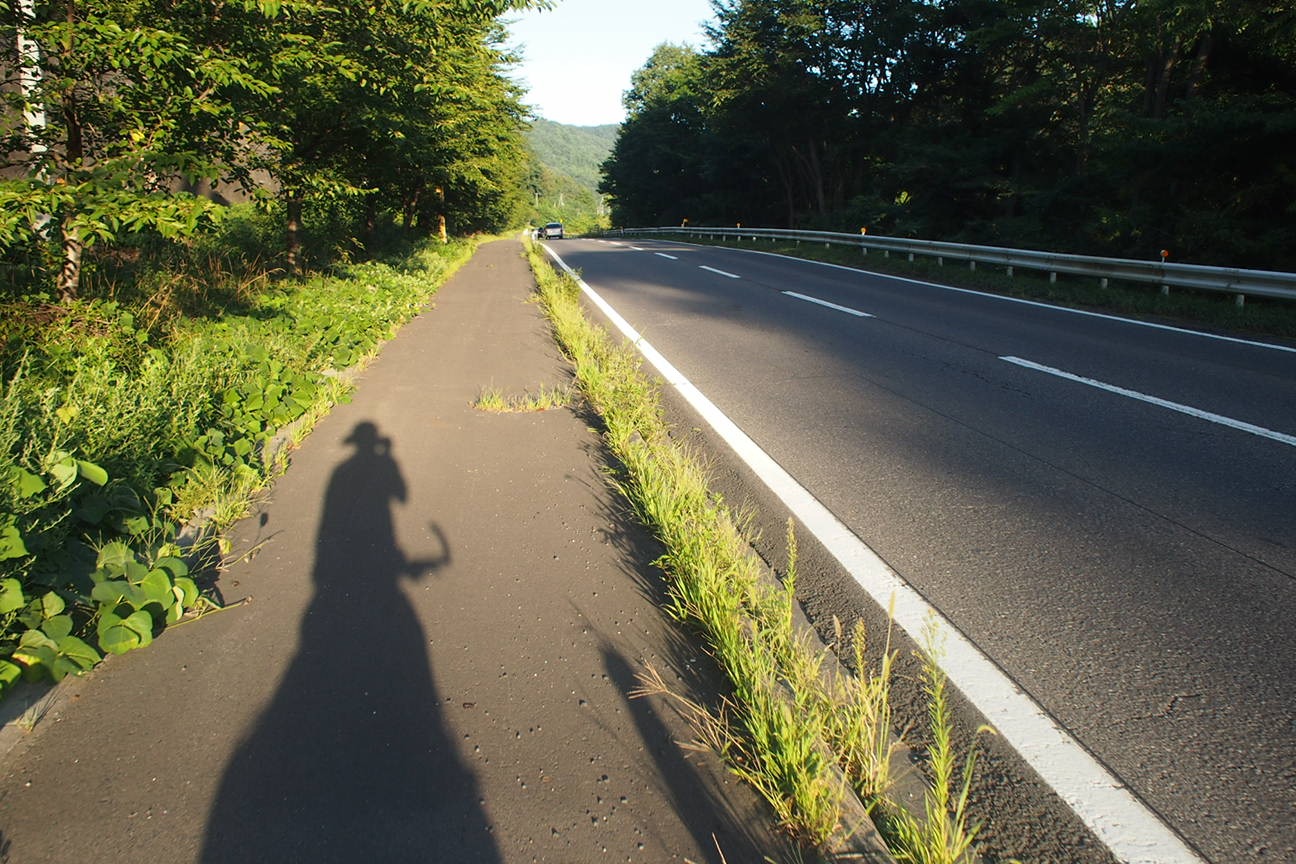
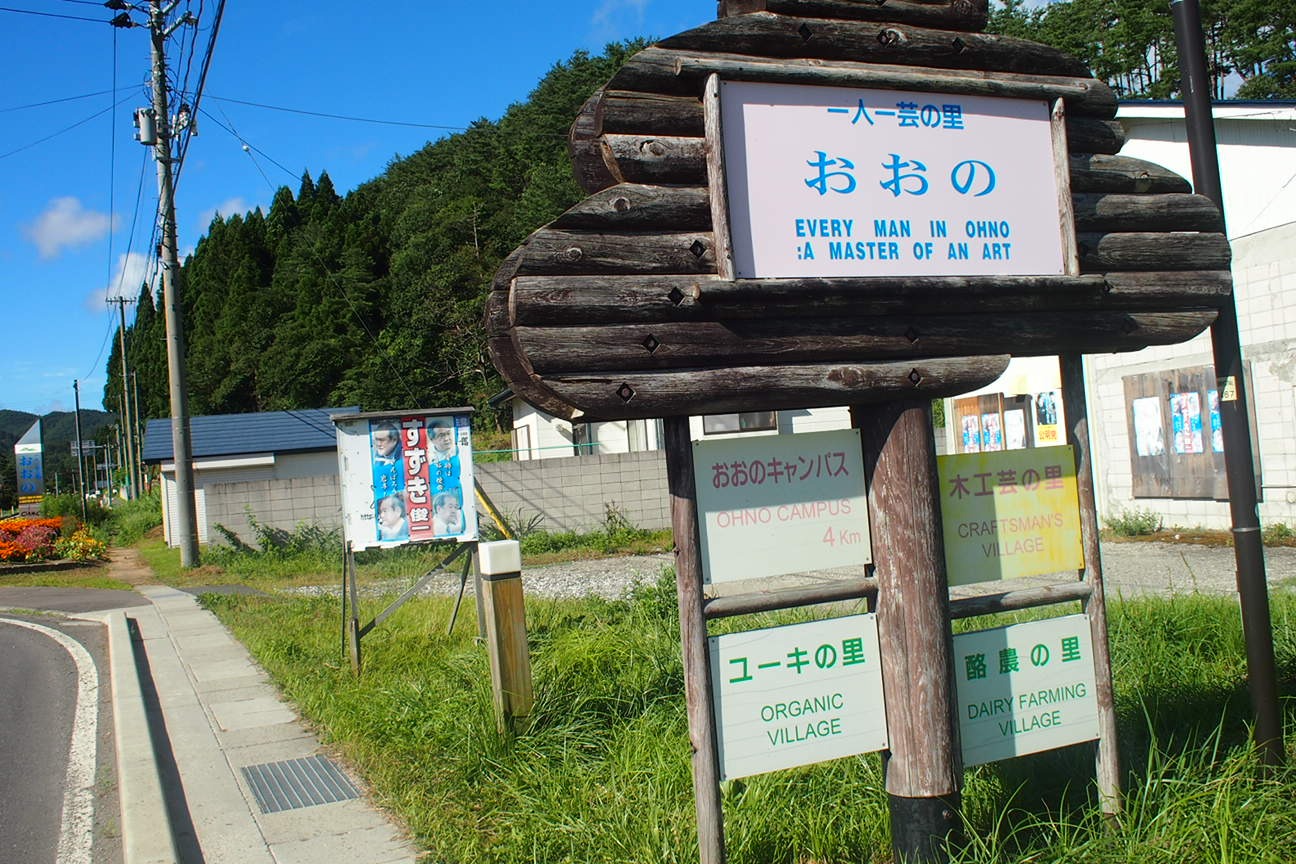
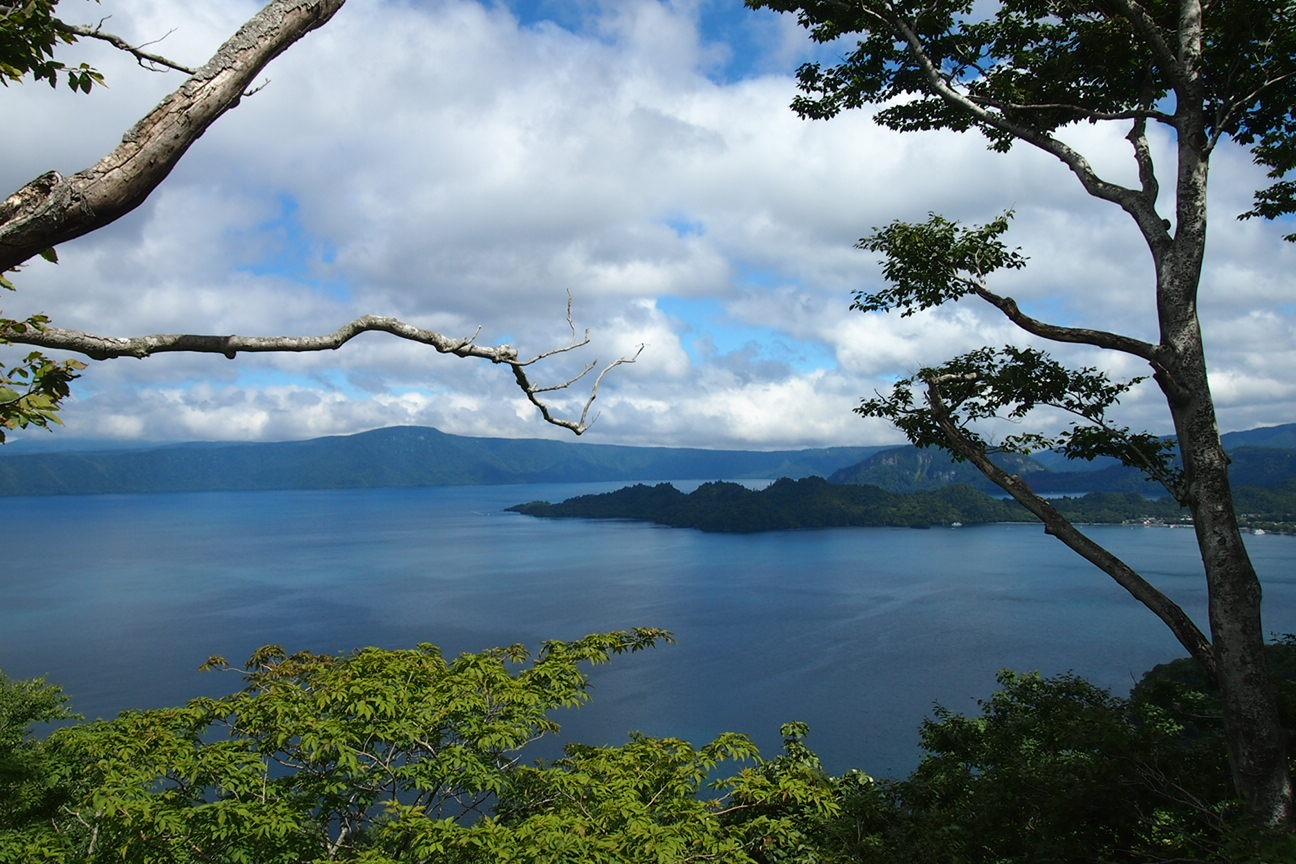
AI TranslationOn the road again. It's hard to imagine that one day I'll wake up and won't have to go anywhere. Still, for almost a month now I've been exercising every day, sleeping eight to nine hours a night in the fresh air, taking salt baths, not to mention the beautiful views everywhere — nothing to complain about. The forest road from Towada led me to a small village. At the crossroads there's a sign pointing right to the city of Akita — home of the Japanese dog breed. But I need to go the other way.
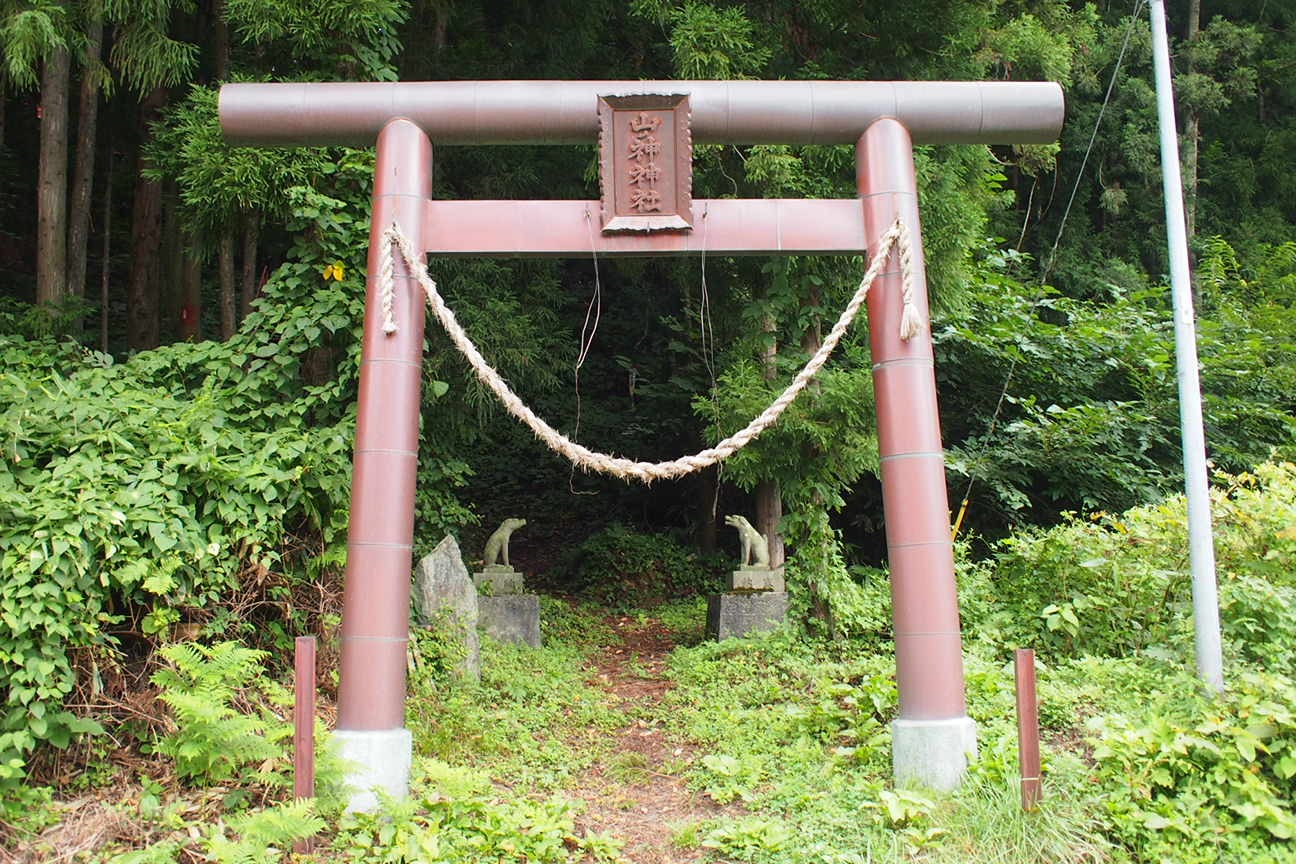
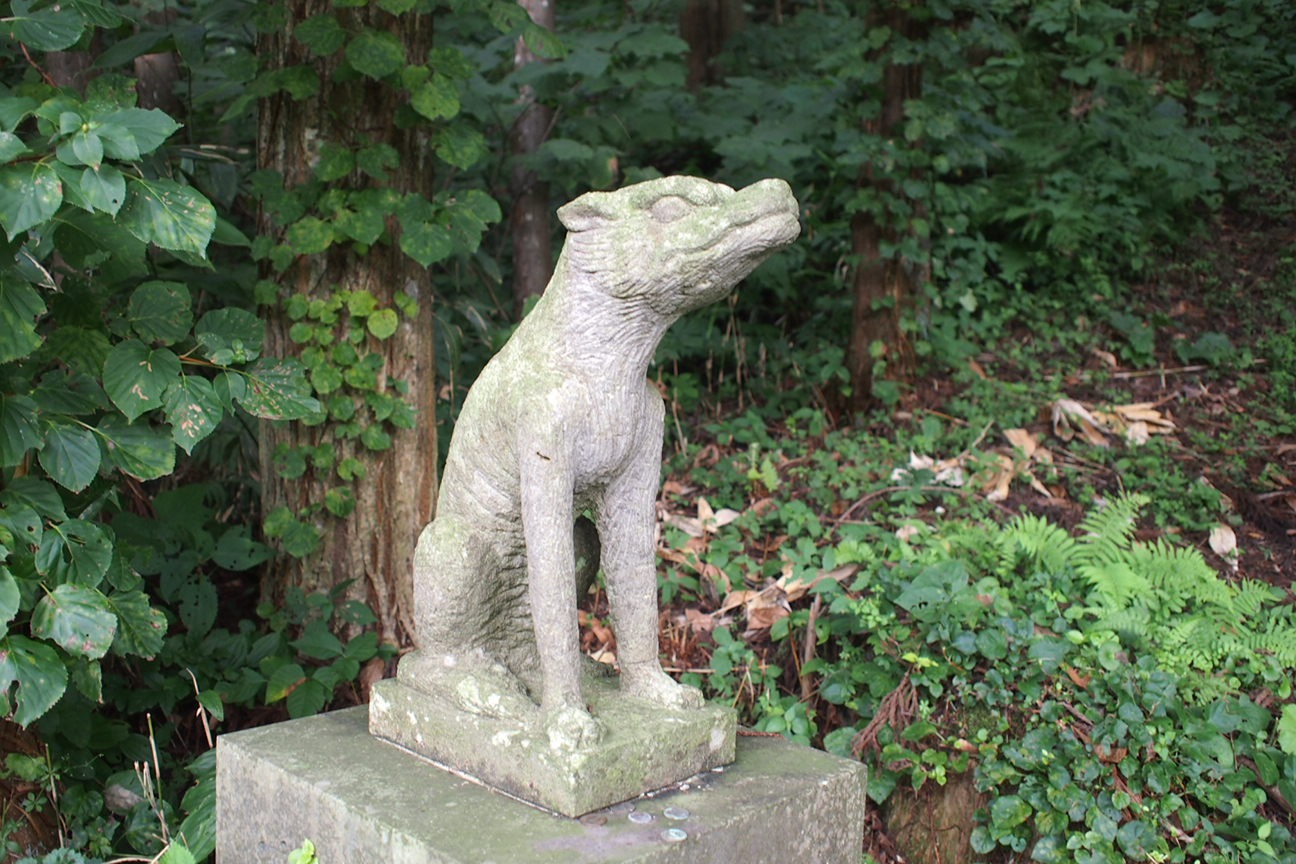
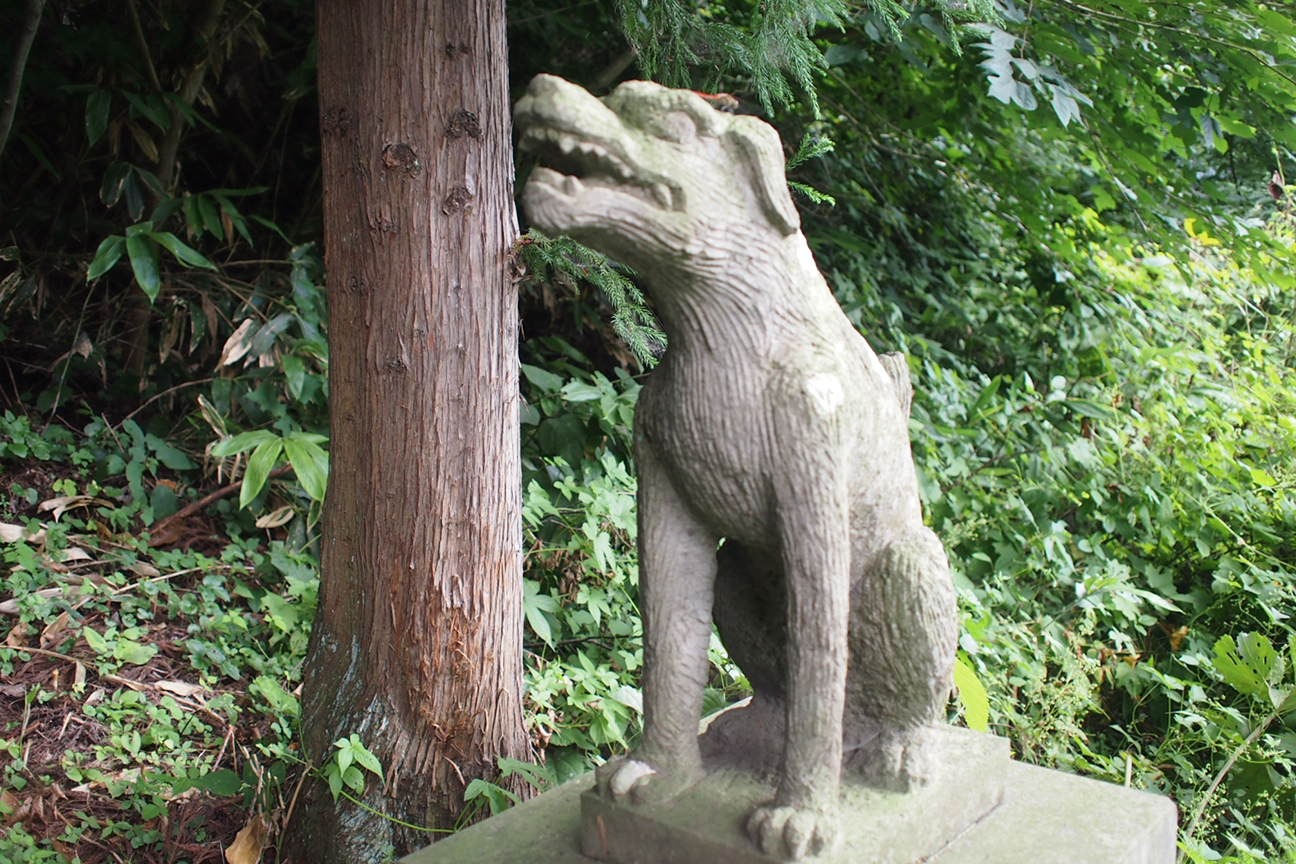
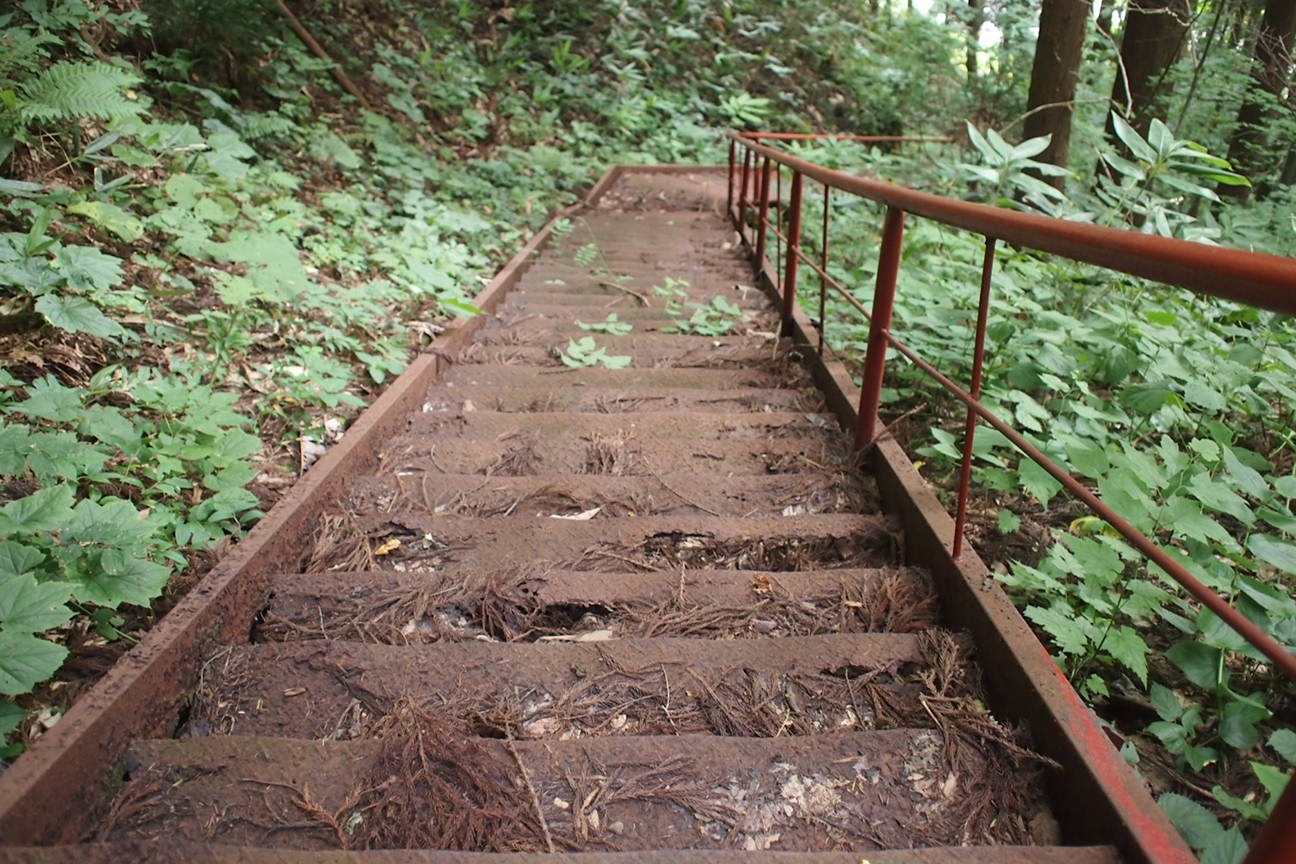
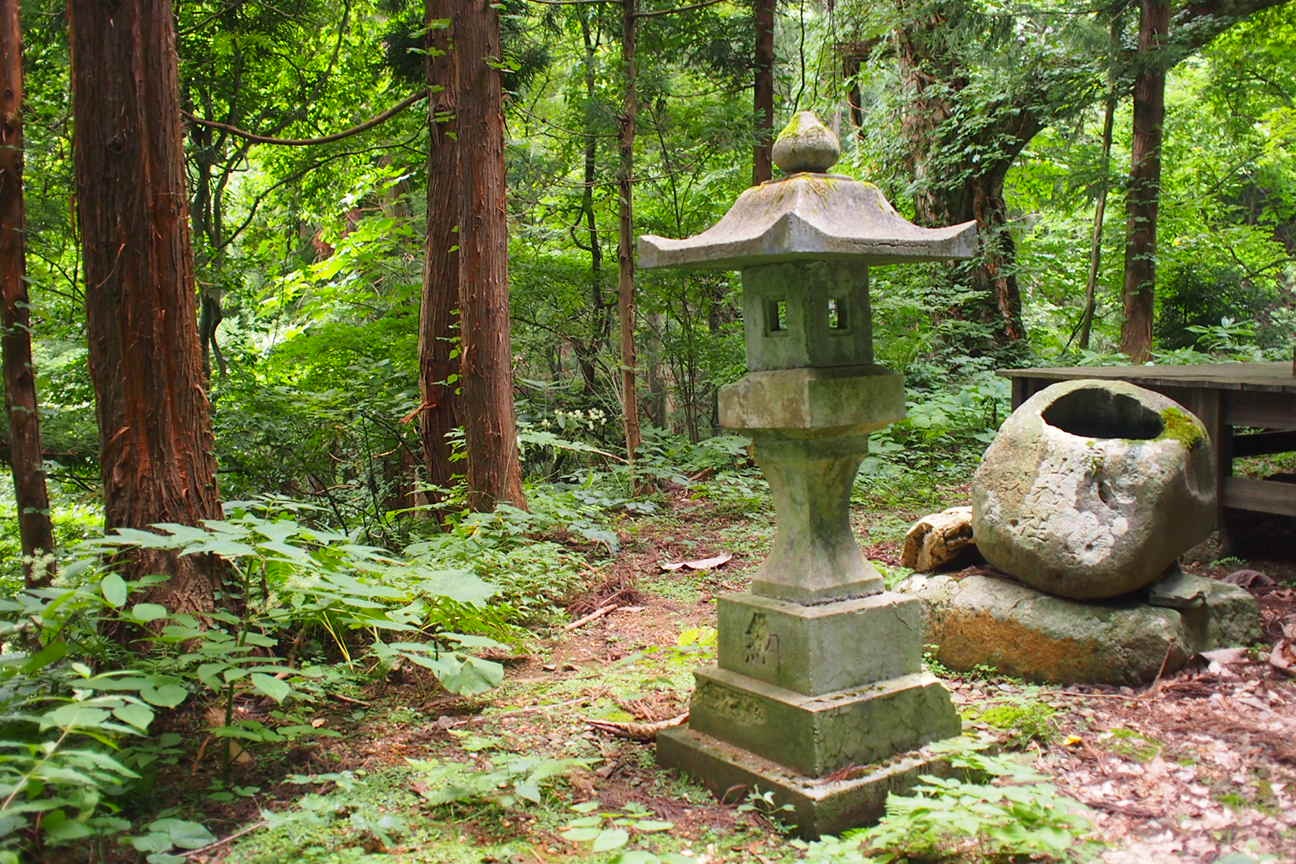
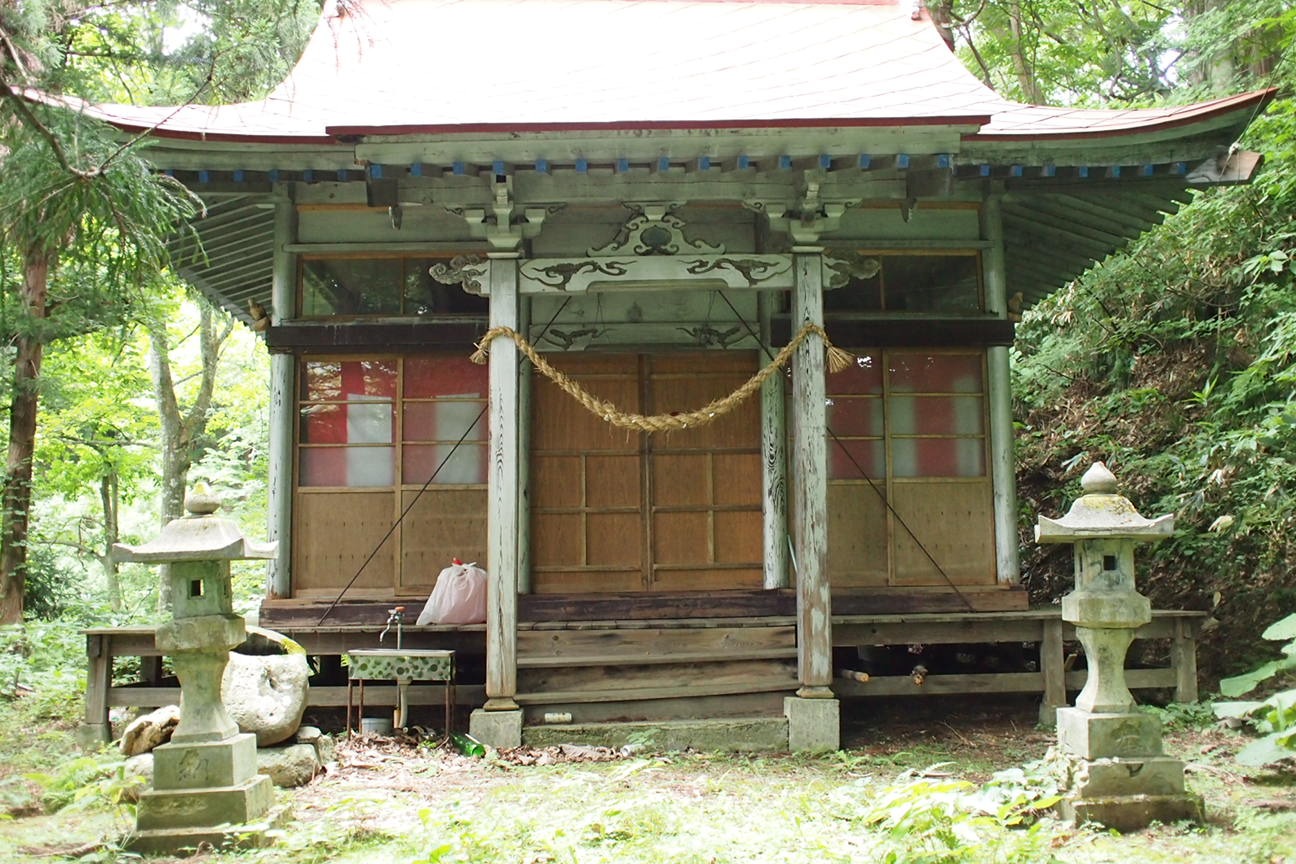
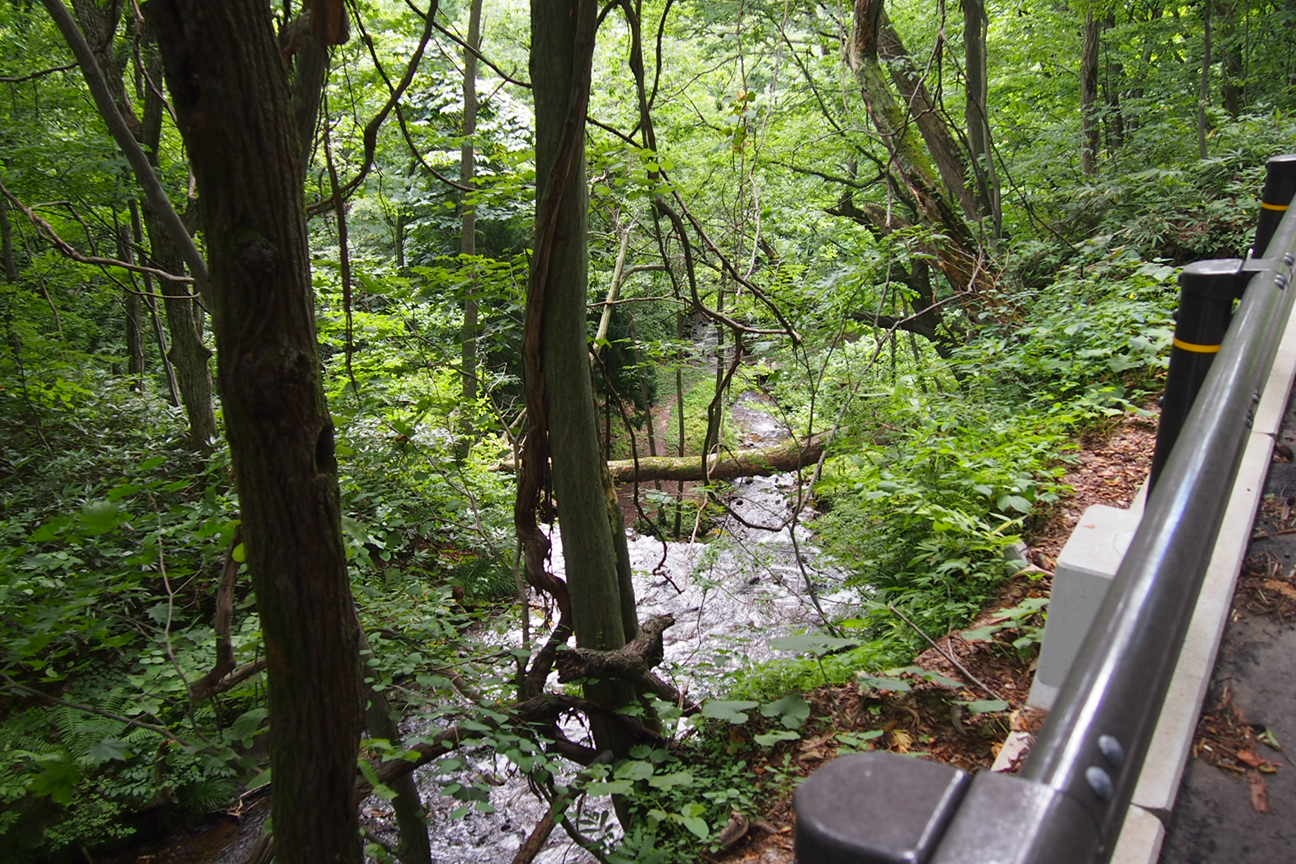
I was thinking that Honshu is actually a completely different Japan. Rich with history of feudal wars and legends. A huge boulder by the river is supported by just one tree, forming a roof, and next to it a sign reads "Many years ago, according to legend, an evil but very beautiful woman lived here who killed travelers and robbed their belongings." More and more often, trails branch off from the main road into the forest. These trails were possibly walked by monks, hermit samurai, and wandering poets. On the roadside stand tall gates, and behind them a rickety staircase made of rusted iron. It leads up the mountain. The entrance to the stairs is guarded by two stone dogs. I put down my bike and started climbing. In two places the staircase collapsed under me, but carefully, I was still able to reach the top. There was a wooden temple there. The gates were closed but not locked. I opened them and smelled dust and old wood, but a curtain blocked the entrance. Inside it was dark, some things were scattered in the corner along with a dusty bottle of sake. Further in the village, I saw about six more temples within a five-kilometer stretch, but they were better maintained.
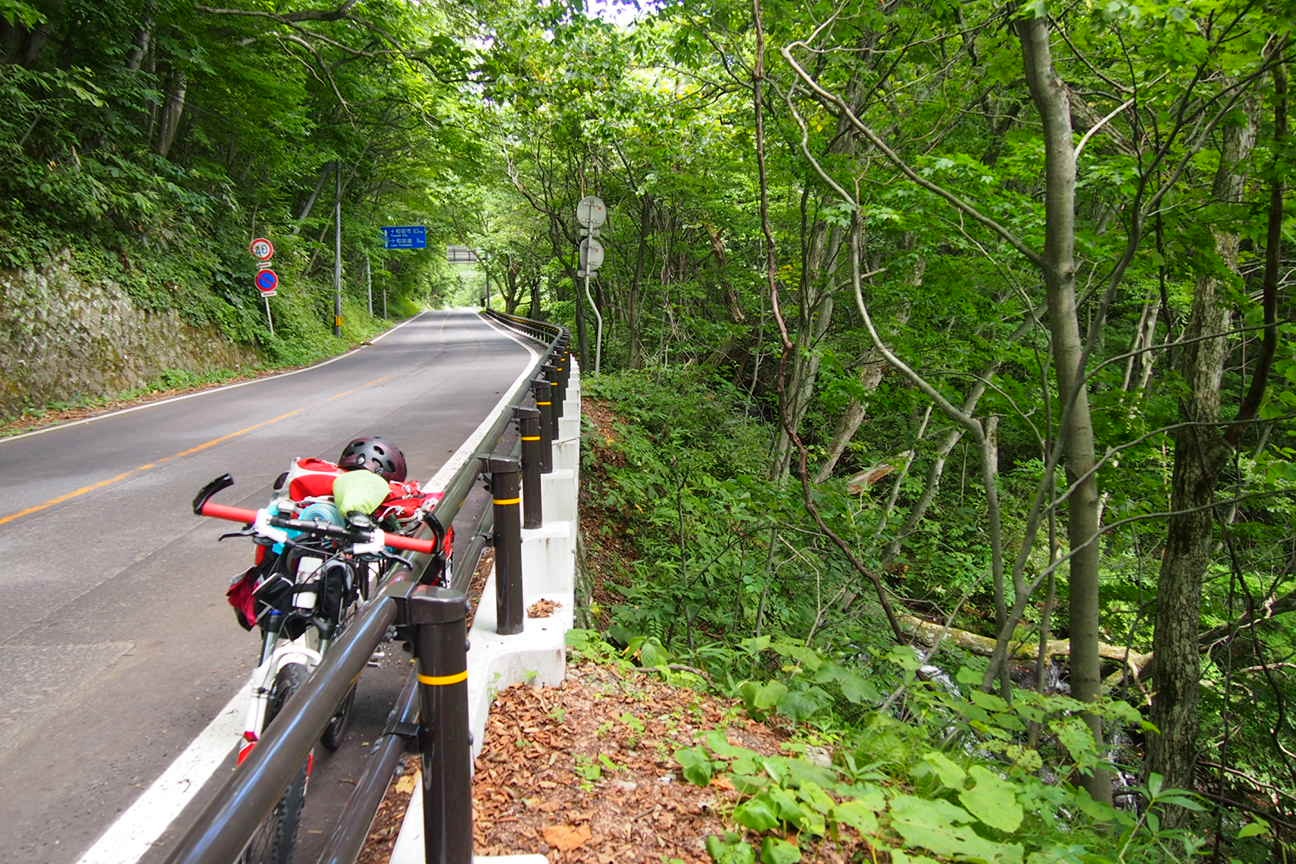
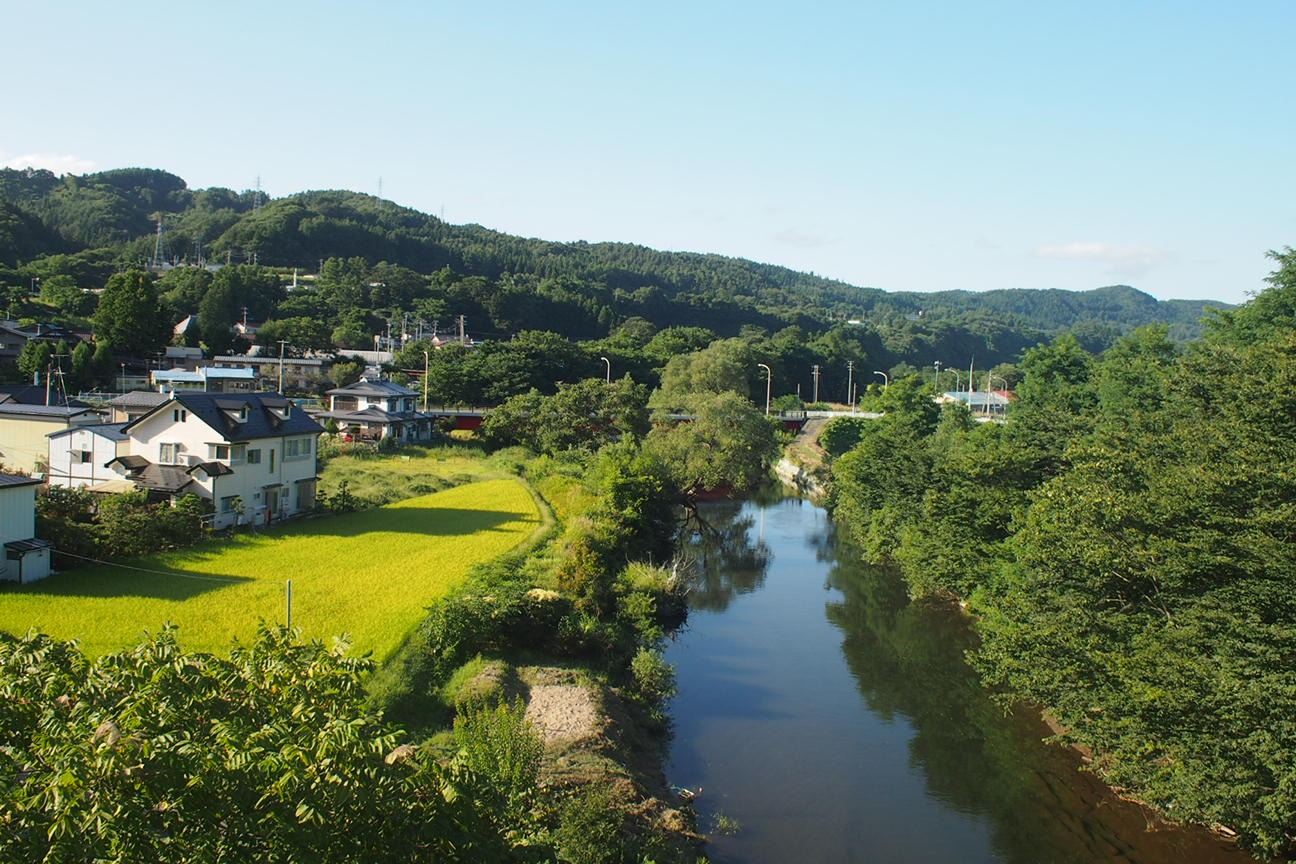
After the night ride of 147 km on Hokkaido, I'm no longer afraid to ride at night, moreover, it's much better. The sun doesn't burn, there's less traffic on the roads. But there's another problem that makes you start thinking about lodging not at seven like before, but already at three. It's mosquitoes. In the forest, as soon as the sun starts setting, they swarm together. I got onto Route 4, which leads to the city of Kuji, on the coast. I planned to reach it today, but the enticing views around didn't let me pass by. On the bridge over the Mabechi river, I somehow caught internet signal and was able to publish a post. It was five in the evening, and the road went into the forest and mountains. Google Maps showed that ten kilometers from me in the mountains, right on my route, there was a campground. It's marked with a little tent icon on the map. Somehow scrambling upward, there where Google showed a trail to the campground, I saw an open gate and an asphalted road going further up the mountain. At the entrance hung a sign with an image of a yellow star wearing a hat.
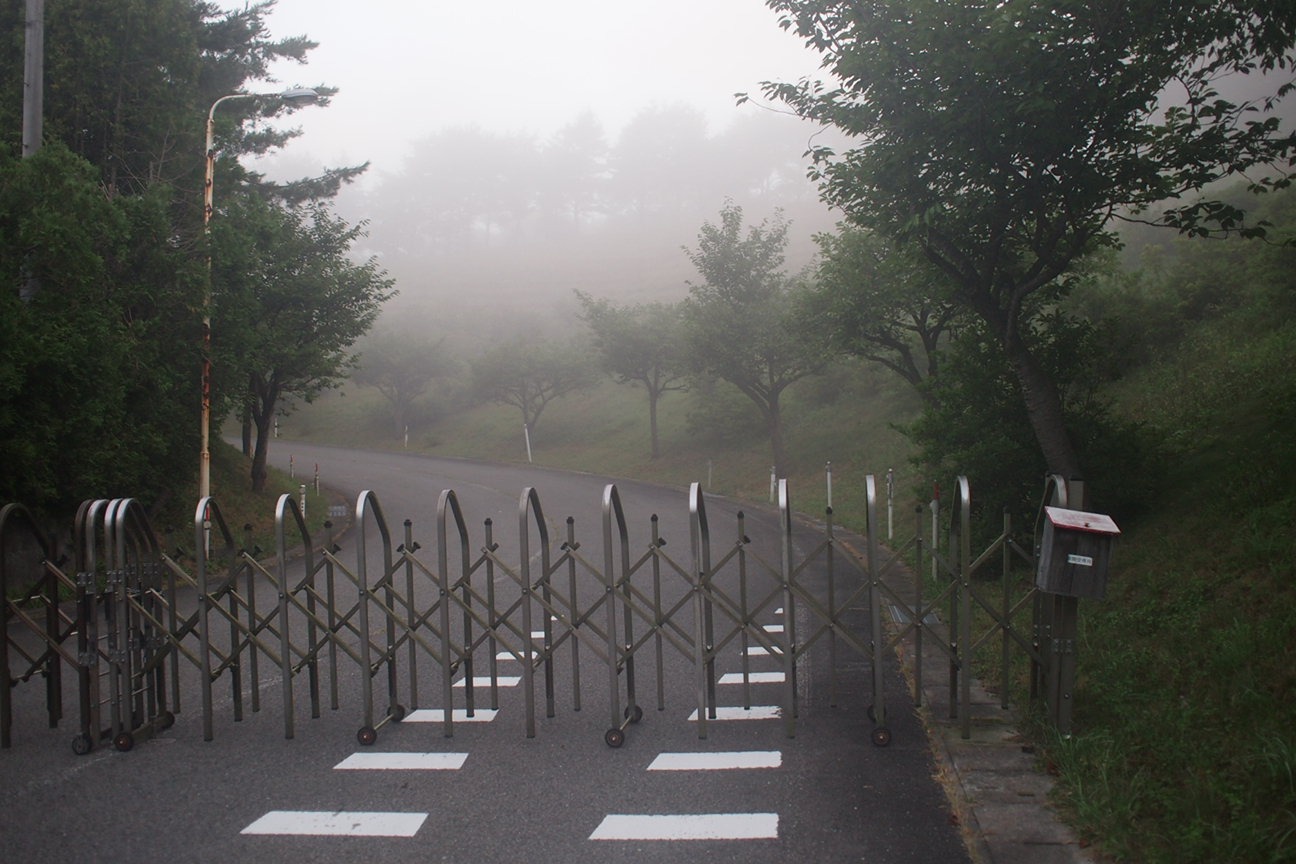
I rode inside and started climbing the road, hoping to see tents somewhere up there. There were no tents, instead there were clearings along the road, sparsely planted trees for shade and benches. Even higher up — a baseball field, from which you could already see a large stone complex with a dome. All of this looked like some educational institution or museum. Judging by the star at the entrance, probably a planetarium. I rode up so that the blue dot on Google Maps indicating my location lined up exactly with the little tent — it was the entrance to the building.
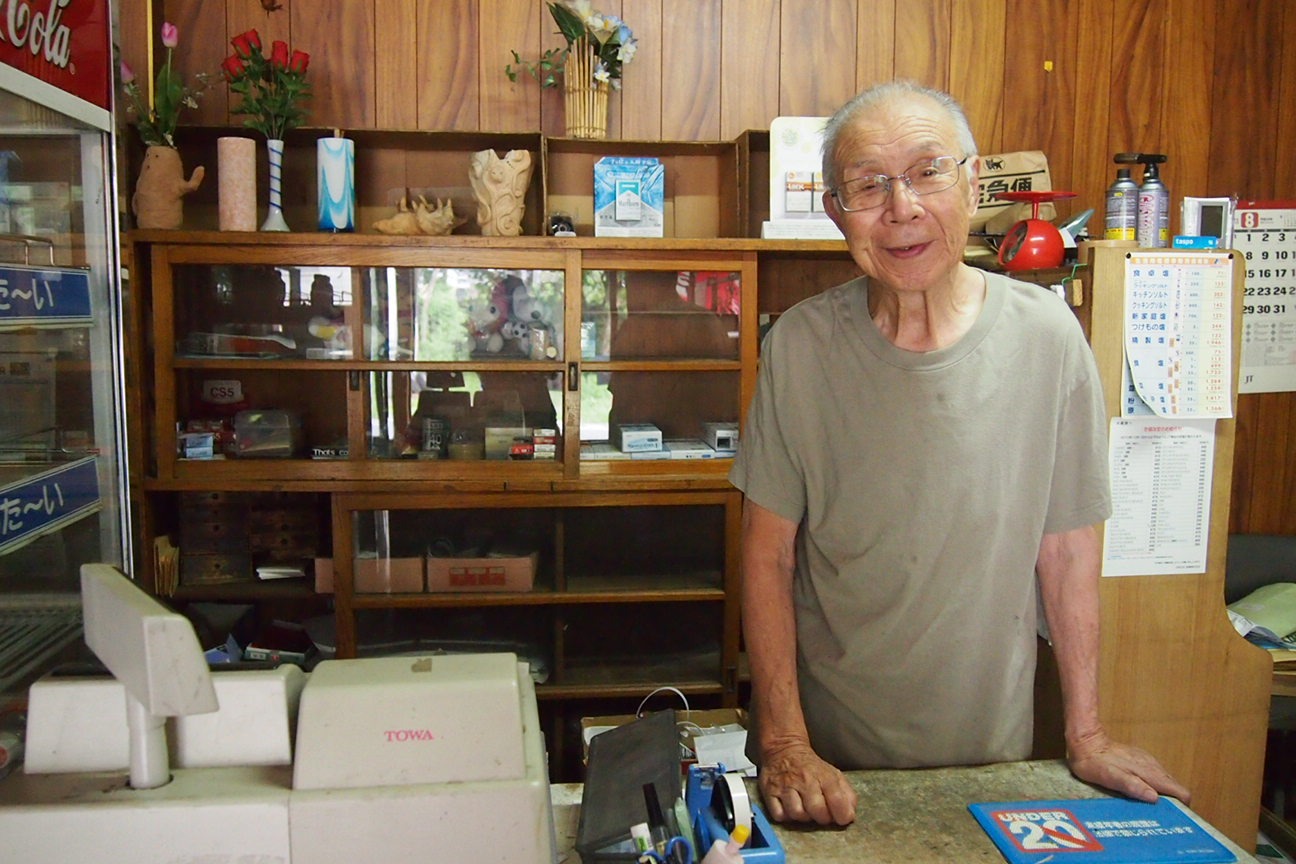
Inside, like in apartments, there's a small step and slippers standing there. In the office behind large glass, a light was on. I went in and saw an old Japanese man bent over blueprints. I knew I would scare him when I knocked on the door frame, so I tried to do it as gently as possible. The Japanese man turned around sharply and with a face full of fear, pressed himself into the office chair, gripping it with both hands. I apologized for scaring him, wished him good evening and asked about the campground. As it turned out, there is a campground here, but for students who come in groups. He crossed his arms and said: — Nai (no).
He made the same gesture when I asked about hot water. The last pack of noodles was lying around in my backpack, and I really wanted to have dinner. From the mountain there was a view of the horizon lit by the sun. It was already completely dark, and I had no idea where to go.
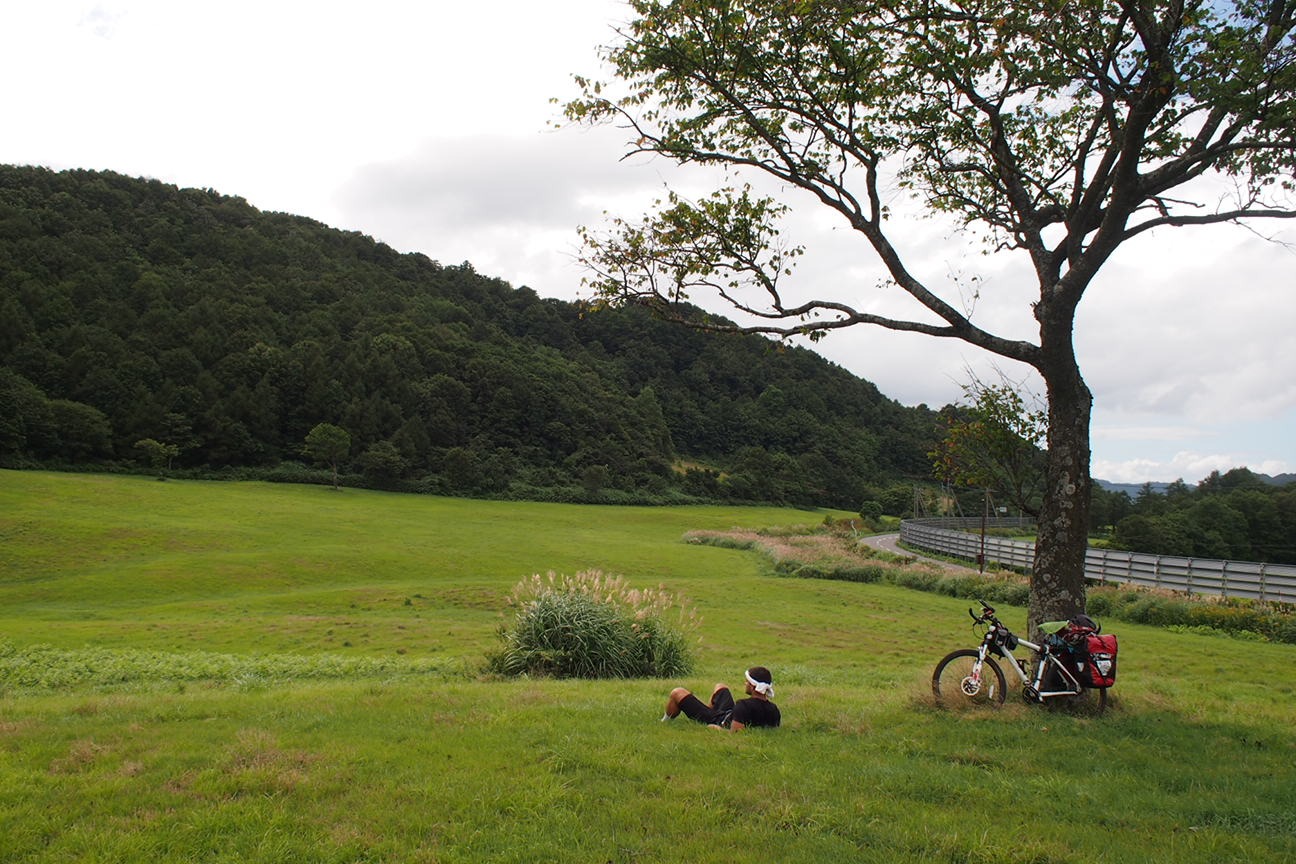
Going down a bit, I rode into one of the clearings and started thinking about what to do next. Behind the gate below you can hear the noise of cars on the highway, but here it's so quiet and cozy. I saw headlights from above, where the planetarium was. I don't know why, I automatically threw the white bike into the grass and lay down in front of it, hiding with my black clothes. I had a white towel tied on me, I took it off. The car slowly drove past me and continued down to the gate.
Right behind the clearing there's a gentle slope, from which you can see the gate. The Japanese man stopped the car, got out and closed the gate. By that time I had already lowered the bike down so it wouldn't be visible from the road. When the car returned, I got out the rest of my chips. From the mountain slope there was a view of the starry sky, the same as it was on Fuji. After noodles seasoned with cold water I lay down on the mat, wrapped in my sleeping bag, and fell asleep.
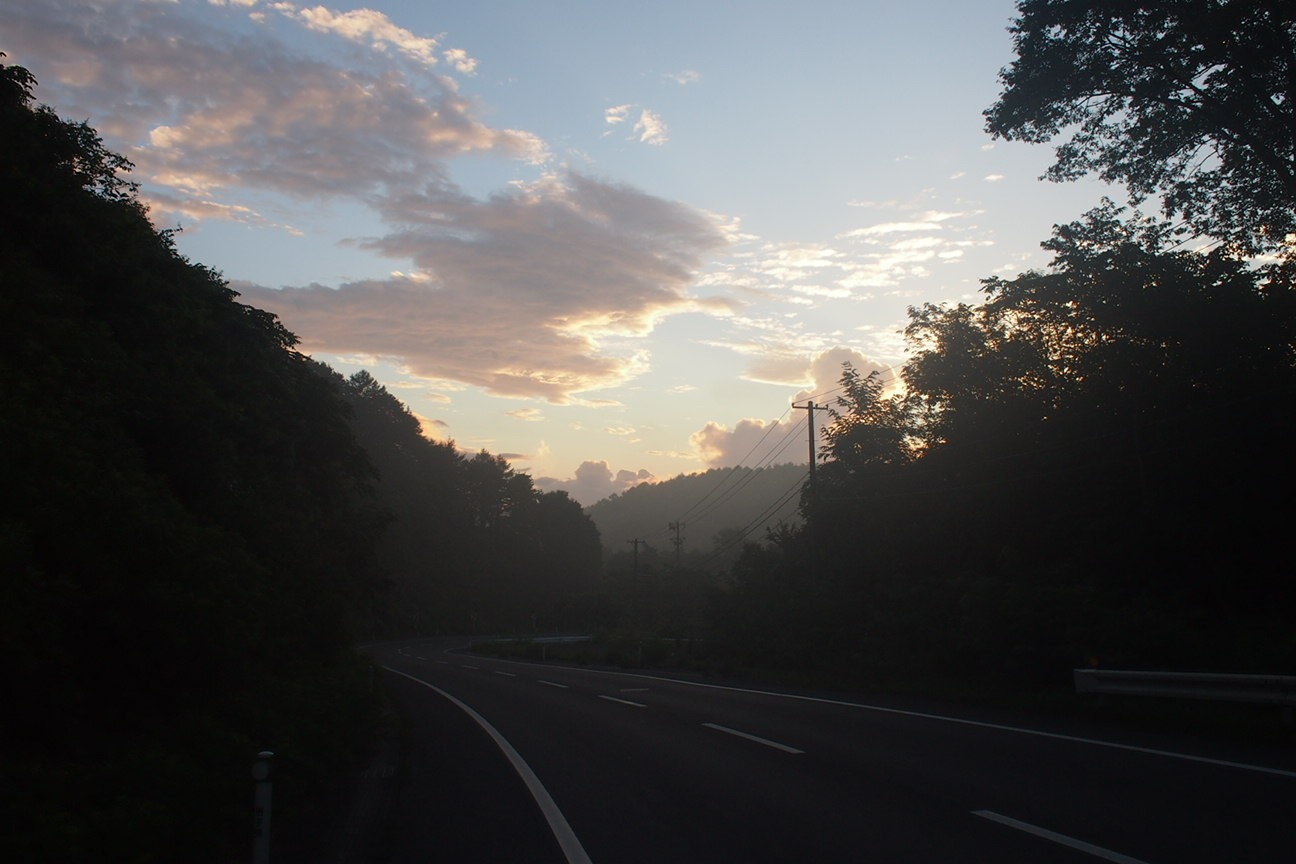
In the morning I got up with the alarm at half past four, packed up, climbed over the gate and rode on. To the Pacific Ocean coast, to the city of Kuji.