Waste separation in Japan
AI TranslationIn Japan there's more than one settlement called Takayama, besides the city there are also two villages. The city of Takayama, where a shower, warm bed and pleasant young company awaited me, has a population of 94K people and is located in Gifu Prefecture. I descended there from the Japanese Alps. The city is mostly single-story, quiet and is popularly called "Little Kyoto", probably because of the old town district where buildings from the Edo period have been preserved.
Amber and Mike, like many English speakers in Japan, work as English teachers in local schools. They lived together in Chicago, moved to Japan together, and rent a two-story house by the river on the outskirts of town. Mike is a DJ and in Takayama, he really misses "city life". I only managed to exchange a couple phrases with him, as he spent the whole evening connecting PlayStation to WiFi through his laptop: playing with strained red eyes staring at the monitor. Amber is more sociable and a terrible potty mouth.
— The way they dress! Did you see? What the hell kind of rocker is he? Why does he walk down the street like a fucking rock star? — we were discussing Japanese fashion with her. Another reason for her dissatisfaction was the complicated way of separating garbage in Japan and I'd like to tell you about this in more detail, starting from afar.
Territorial problem Japan, having a population similar to Russia's, is 45 times smaller in territory. Population density in Japan is 40 times higher than Russia's. Under such unequal conditions compared to Russia and European countries in general, the consumer market in Japan is quite high to a certain extent. The Japanese don't deny themselves things we're used to, such as: cellophane bags, plastic packaging, paper cups, paper tickets, cellophane wrapping, plastic spoons, cardboard wrappers, tin cans, batteries, etc., with purely Japanese quirks being a separate list, and the question arises:
Where to put all this? They're looking for an answer. Looking in different directions: they started charging for bags in supermarkets so people would save them, they recycle some waste for reuse, they build garbage islands after all. There are several of these in Tokyo Bay, and also off the coast of Osaka. We're talking about artificial islands made from processed garbage right in the sea. They're inhabited and have great administrative significance. On Ogishima Island in Tokyo there's a metallurgical plant. On Yumenoshima there are greenhouses, a stadium and a park. The island in Osaka Bay houses an international airport, but the most famous among tourists is Odaiba in Tokyo which offers a beautiful view of the bay and Rainbow Bridge, and is also a popular dating spot.
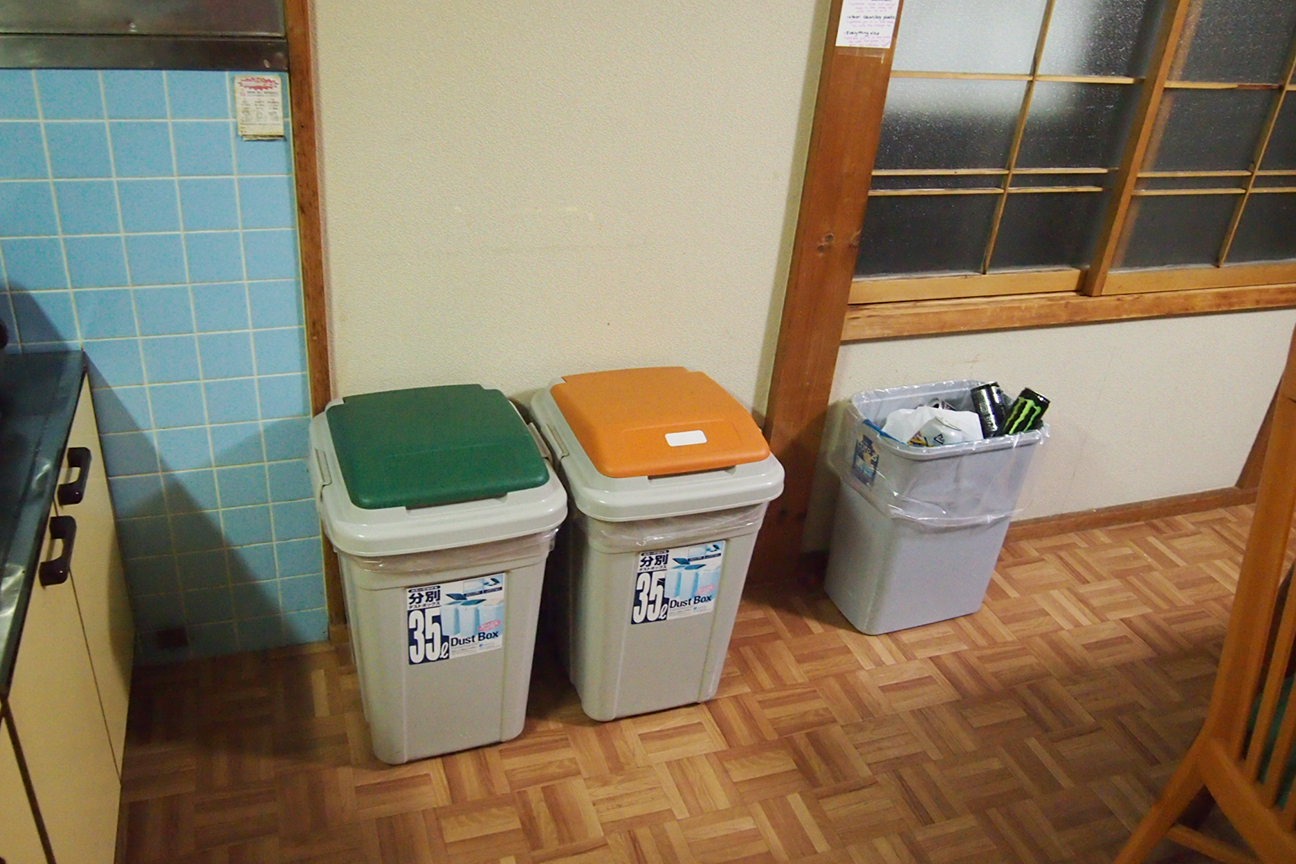
There's a way out! Another grand solution that affected the daily life of every Japanese family was garbage separation, which in its complexity has no analogues in any country in the world. And if under a European sink there are two baskets: for organic and non-organic waste, then under a Japanese sink there's not enough space to place the required trash bins. Each prefecture chooses its own separation policy, but on average it looks like this:
- Plastic bottles.
- Cellophane bags, plastic packaging, caps
- Tin cans
- Burnable garbage (organic waste, simple paper)
- Cardboard Basically, what in Europe is separated on the street into big bins, leaving the lazy person the option to "not bother" and throw everything in one pile, in Japan every family separates at home. Now about the "throwing away" rules.
- Plastic bottles must be washed and dried
- Tear off the label and throw it with the cellophane
- Bottle caps go to the same place (with cellophane)
- Cardboard boxes from milk, juice - are cut to A4 format (or whatever comes out of them?), washed and dried
- Goes without saying, but don't forget to pour out the contents from all cans, bottles, etc.
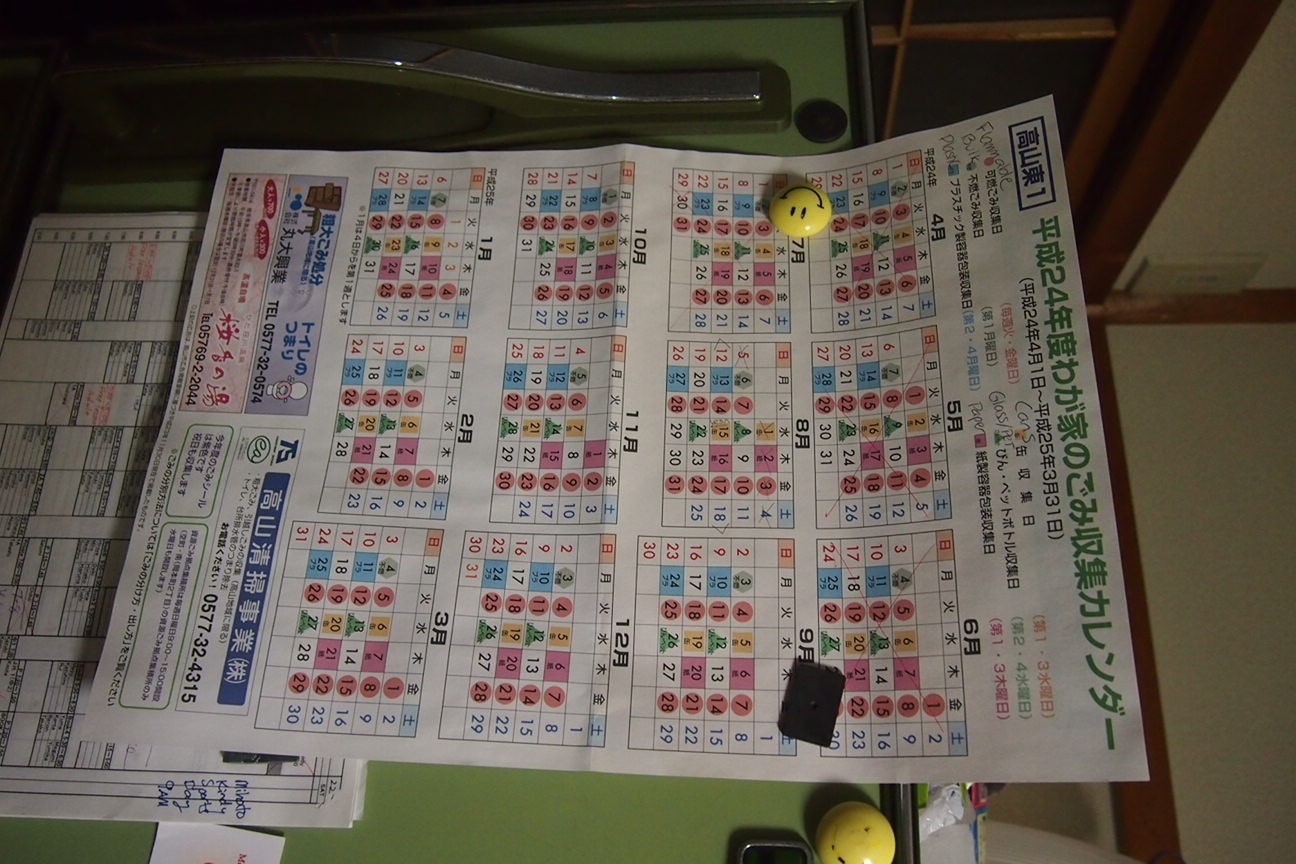
What to do next? On the refrigerator hangs a calendar with pictures and icons provided by municipal services. Say, Monday is cardboard day. You can observe on the streets, by front doors, bundles that from a distance look like stacks of magazines - these are exemplary recycled cardboard packages. Wednesday is glass day, etc., each day has its own theme in terms of garbage, if for some reason your calendar becomes unusable, look out the window, see what's lying by your neighbor's door. In some prefectures you need to sign your garbage bag with your name and address. This makes the final stage especially tense. Judgment day - Inspection The garbage truck arrives early in the morning, and a worker checks the bag. If flaws are found - a plastic bottle in a bag with regular plastic, a cap in a bag with burnable garbage, etc. - a red sticker with a brief explanation will be stuck on your bag, and it will remain lying signed with your name under the door by the entrance. You're expected to take the bag, bring it home to correct the error and keep it until next week. This was the cause of Amber's indignation, expressed in a short narrative 50% consisting of "fuck" and "fucking". — I'm bringing the bag to school for the fifth time and showing it to my supervisor. Bottles are washed, no banana peel, caps removed, what's wrong? He reads the message on the red sticker. — You washed the bottles poorly, they want you to wash them again.
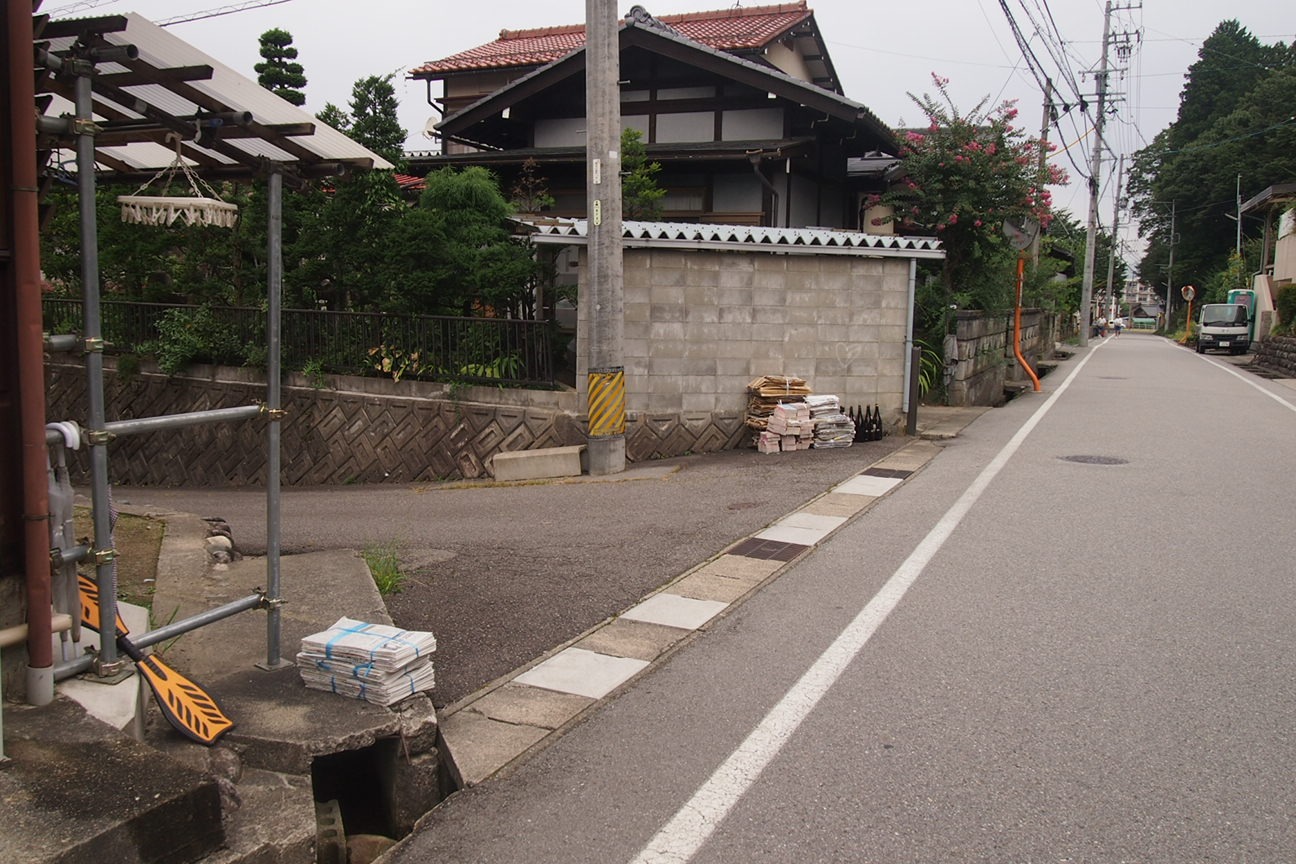
Forget about taking out an old bed and nightstand to the garbage bin - you'll have to call a service that for a certain fee will take them from your apartment. The title of "city with the most complex garbage separation system" was won by the city of Numazu - even garbage bags must be special ones with the prefecture's coat of arms. In Tokyo the population ignores the rules, so the separation system there is almost absent, except for the basic one. Conclusion The phenomenon is that with a complete absence of garbage bins, the streets of Japanese cities are clean. There are no bins even at transport stations, bus stops. But there are some in grocery stores, but they have a sticker "Stop! Not for household garbage" - the only option if you bought a can of drink or ice cream on the street is to eat it right there by the store, or carry it to the next one.