Following the Fukushima Tragedy: Behind the "Tsunami Warning" Sign
AI Translation— Why did you choose Japan? — Why Japan? I like Japan, it's beautiful here. — Dangerous... — Why? — Tsunami...
Fact: during a storm, only the surface layer of water moves. During a tsunami — the entire water column moves, from bottom to surface.
— Is this area dangerous? — we're sitting in the village of Sekkai, fifty kilometers south of the town of Kuji. This is the easternmost part of the main island of Honshu. — Yes.
Toshi, a fifty-year-old website promotion specialist I'm staying with tonight. He answers with a simple "yes," but it's strange: this isn't the "yes" you give when asked "did you have breakfast today," this is the "yes" where you should get up right now and head somewhere inland. But we're sitting in the beautiful living room of his parents' two-story house. He's eating corn, I'm holding a cup of coffee.
Fact: during a storm, the waves build up gradually, people usually manage to move to a safe distance before the big waves arrive. Tsunami comes suddenly. Usually it's preceded by water receding farther than usual. Shells and fish that didn't have time to escape are left on the shore.
Toshi points to the window. A hundred meters from us, a wave destroyed three houses.
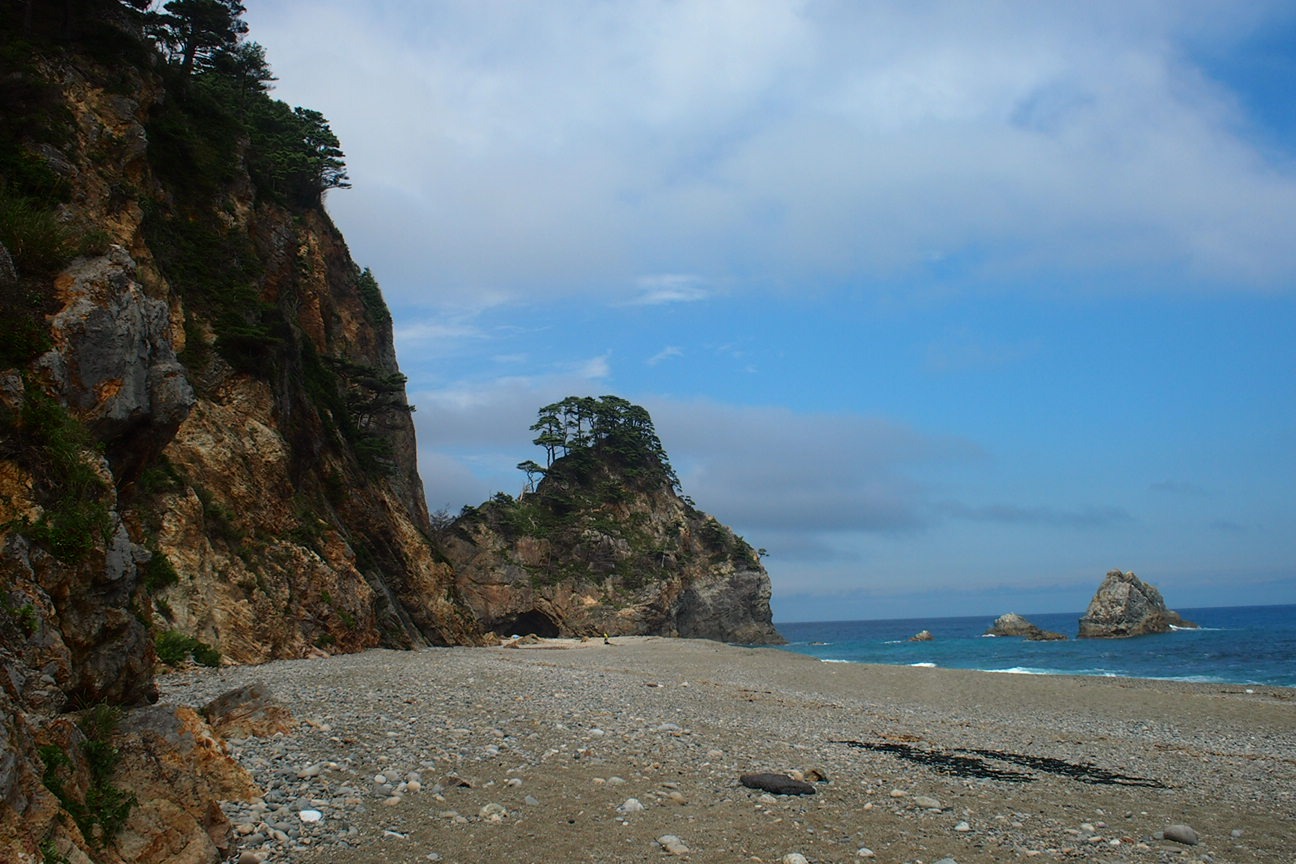
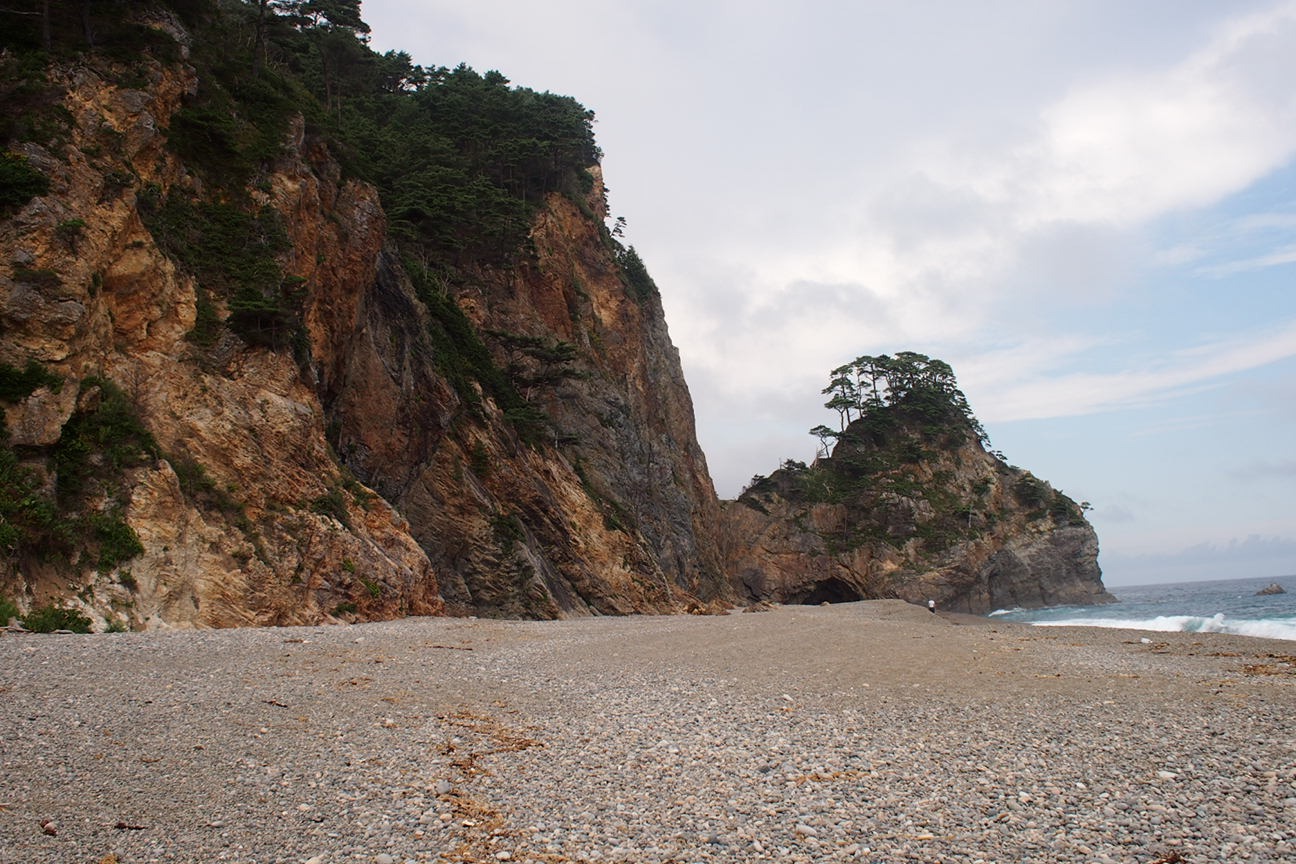
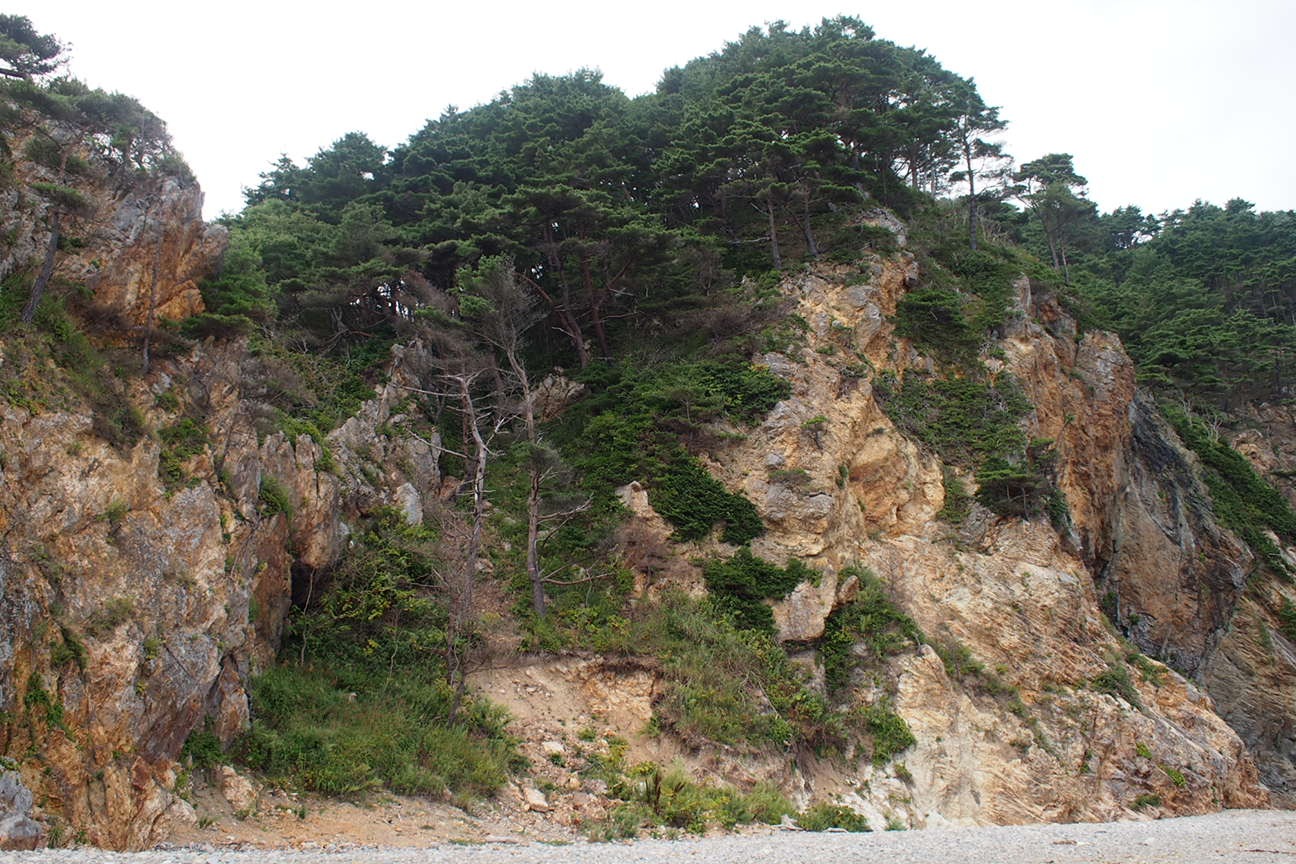
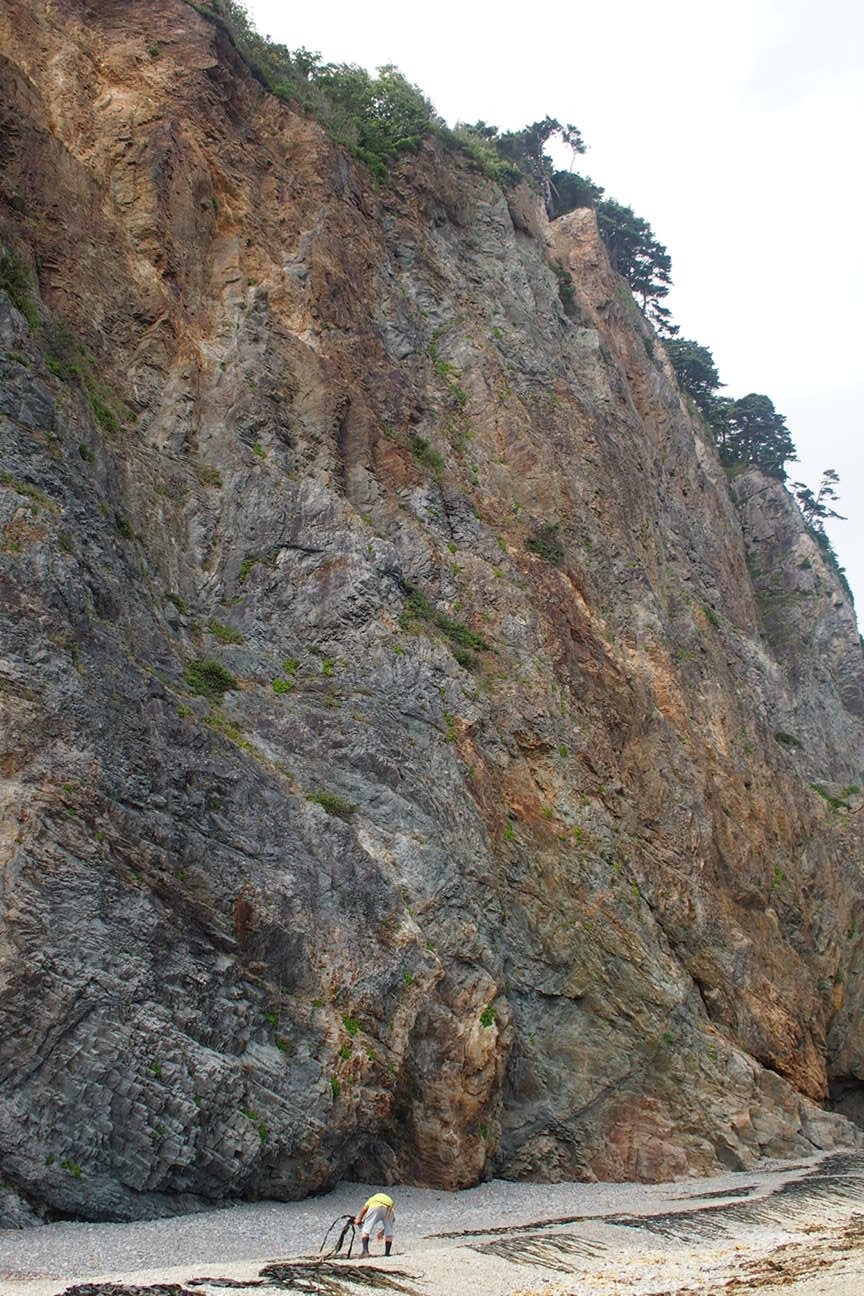
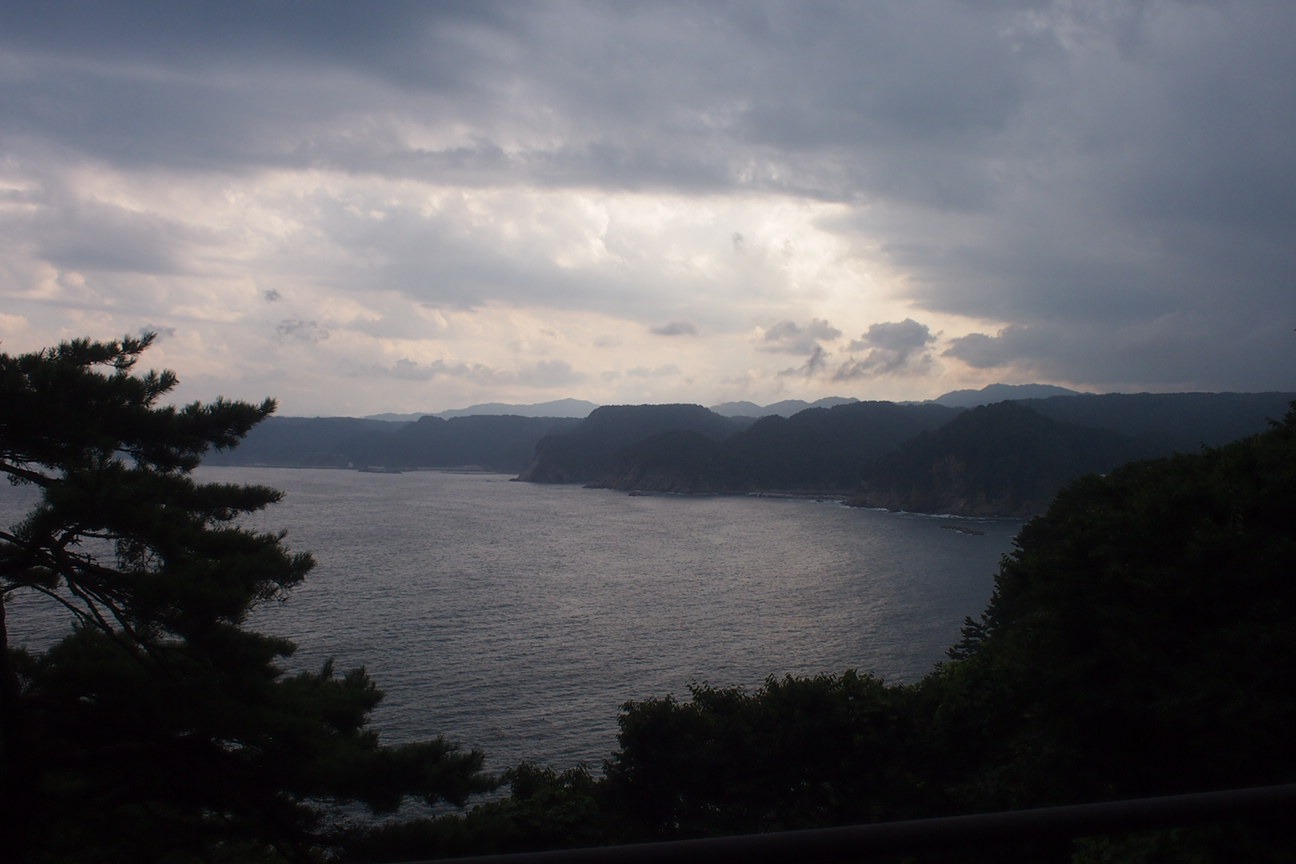
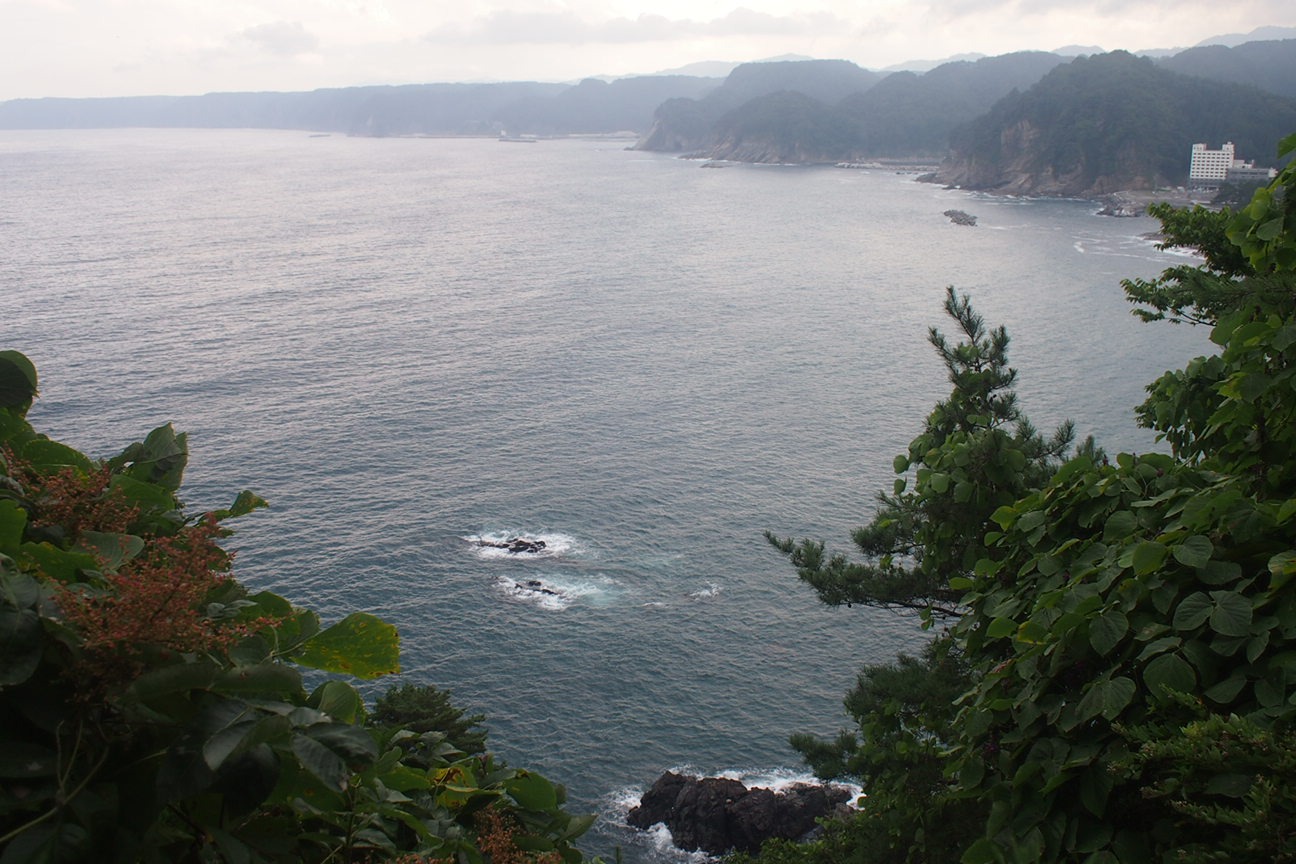
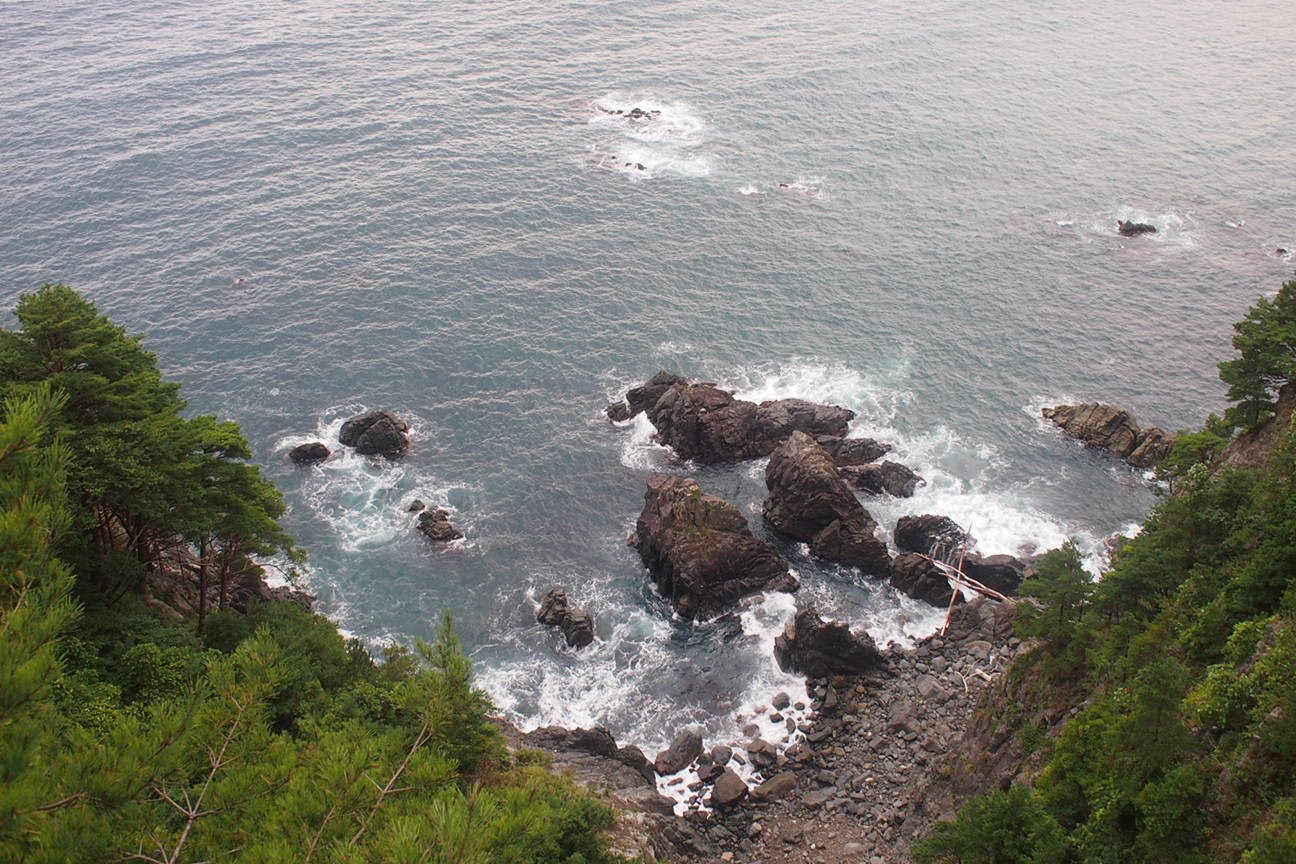
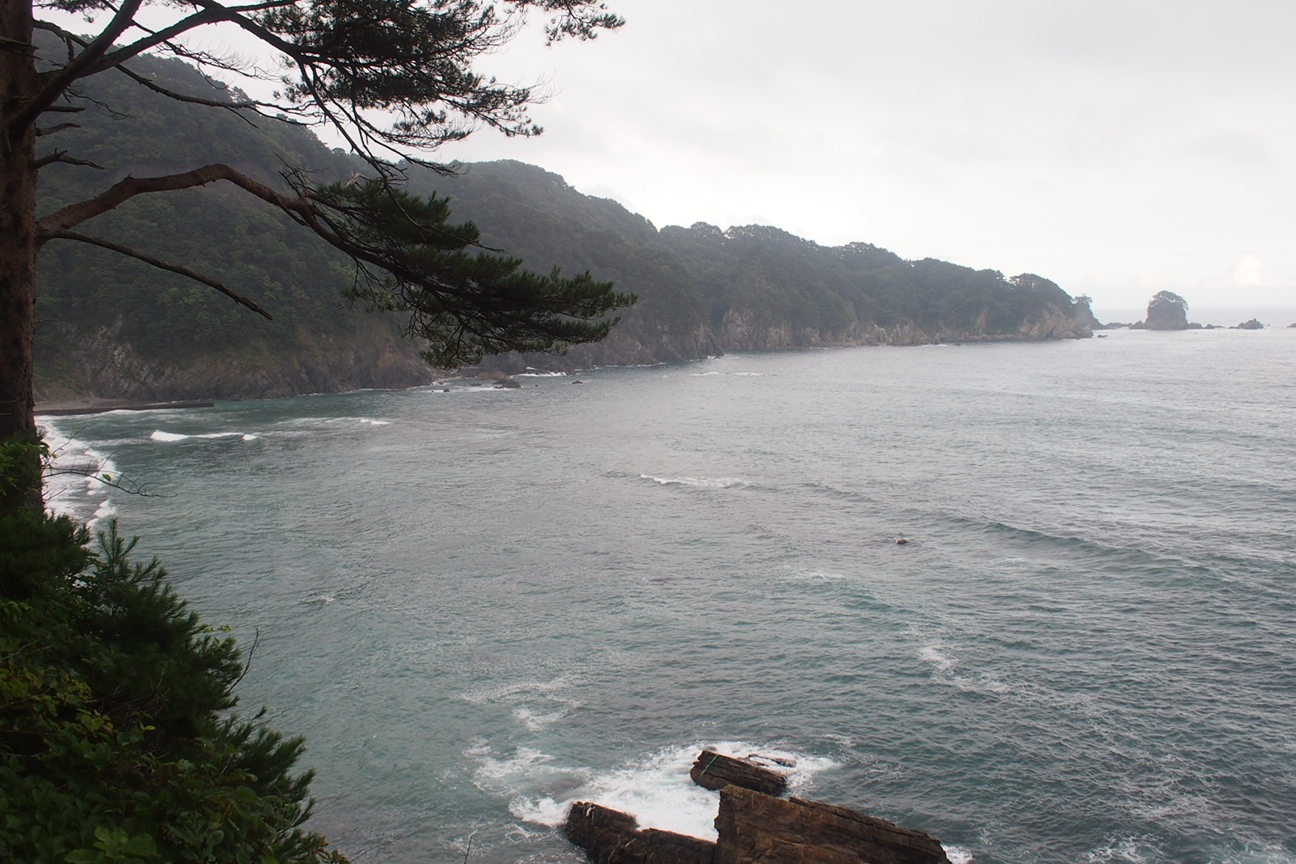
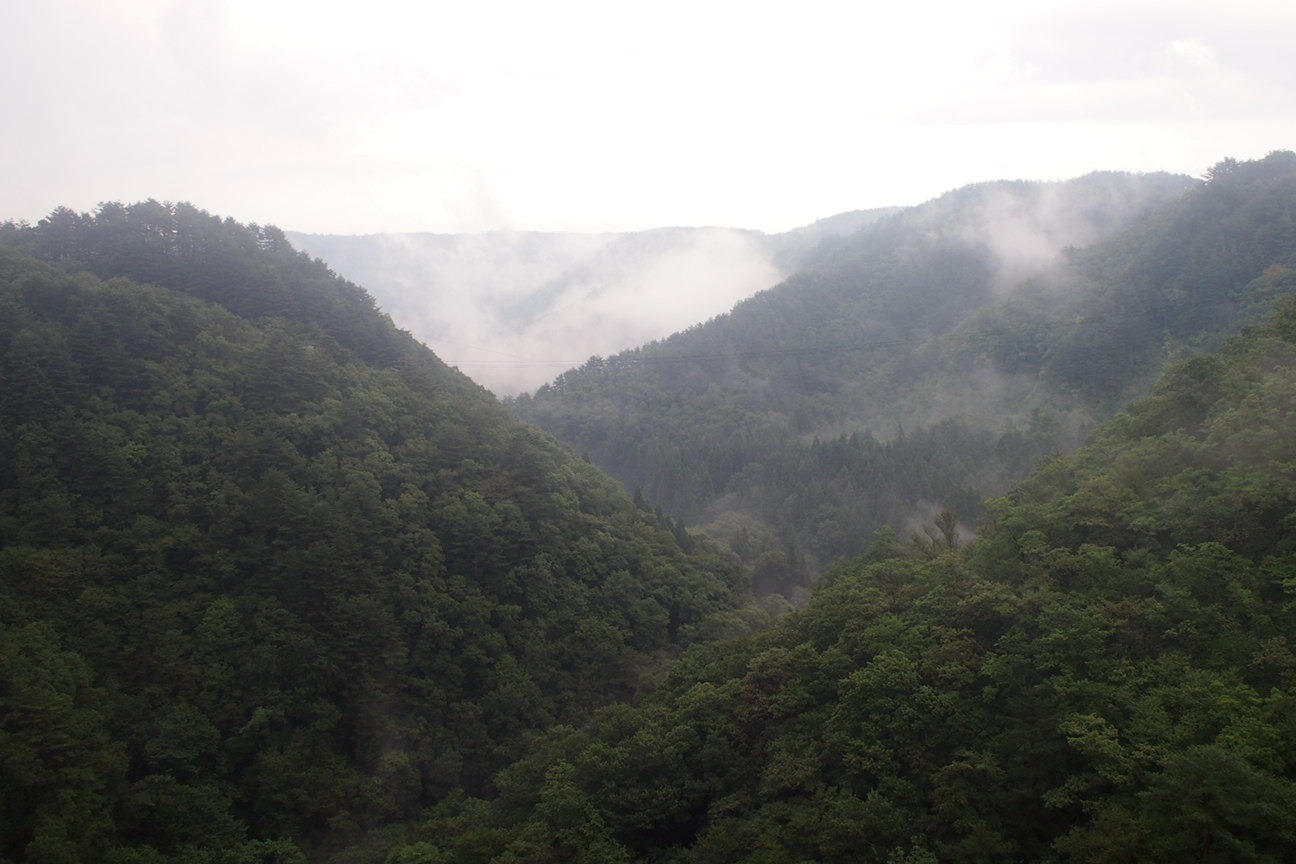
— But why do you live here? When a tsunami could happen at any moment? Why not Tokyo, Sapporo, somewhere farther from here? My Japanese and his English don't allow us to discuss this question in detail. Toshi only said that he likes the nature here. The nature is indeed beautiful here. Sharp cliffs with protruding trees, spruces with bare trunks pointing straight up like an impenetrable wall, and there's something about this fog. It's like the final ingredient in a dish — for effect.
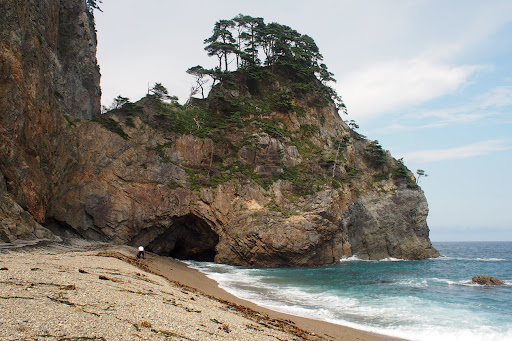
Like how ice cream is drizzled with chocolate around the edges, or Chinese wok is flambéed before serving. Both are edible as is, but for appetite, for effect, you need that final touch. Nature made these sharp cliffs, this moss, these trees with thin branches — already delicious, but then it adds overcast lighting and with a quick hand movement, light haze to the shaggy treetops. Done, ready to serve!
Black bears live in these forests, and to keep them away from villages, the Japanese chose this method: rifles are installed in the forest that fire at set intervals. It sounds like the forest is crawling with hunters, and every 10 minutes somewhere in the bushes a deer dies. Fortunately, this isn't the case.
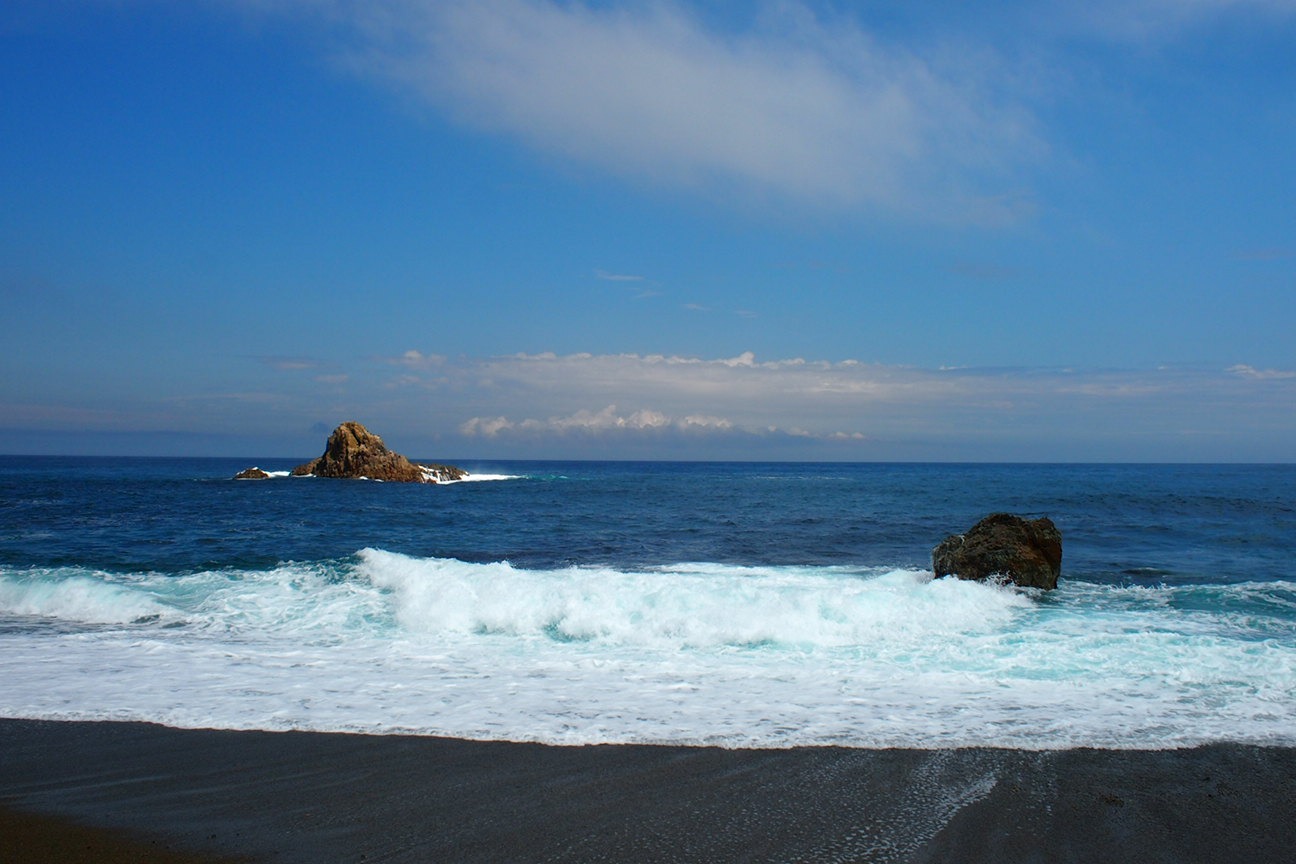
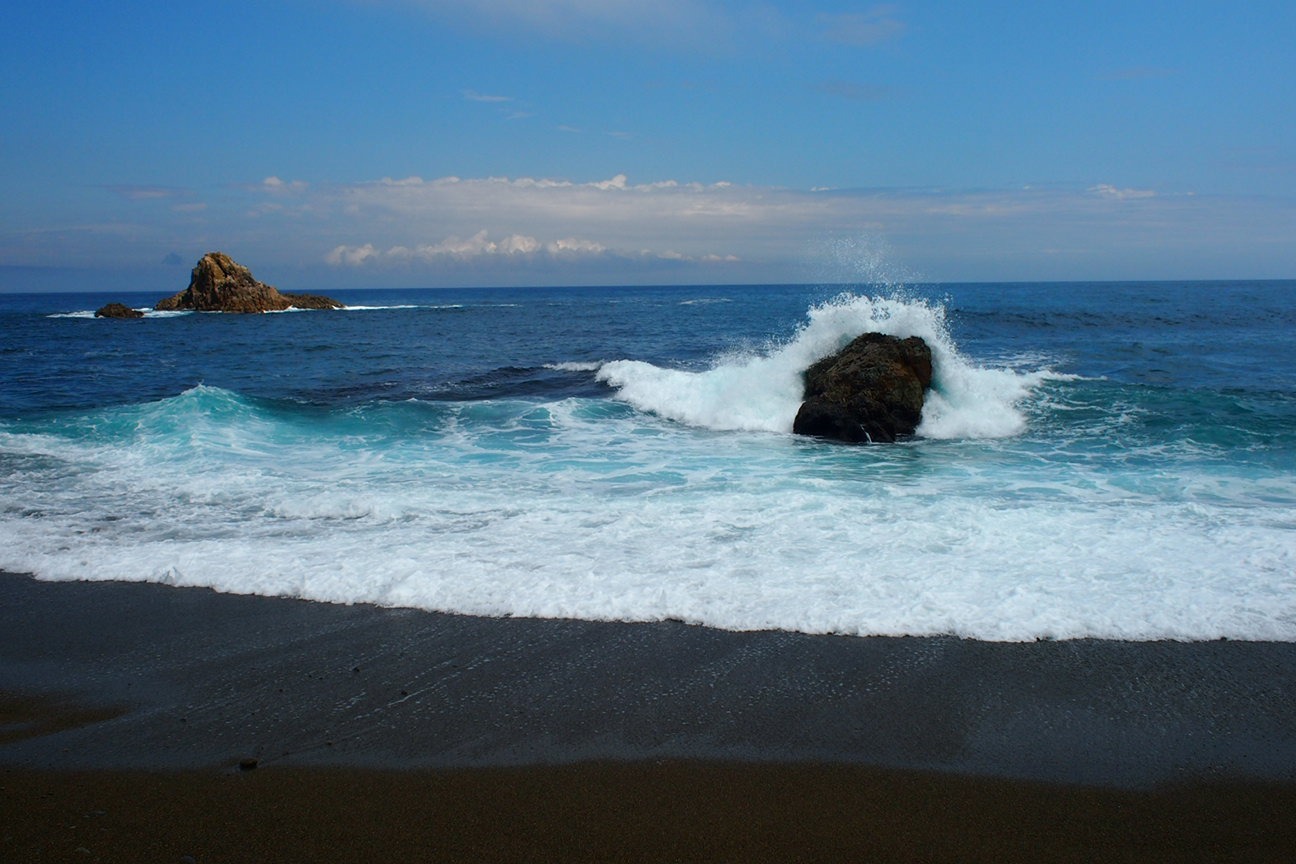
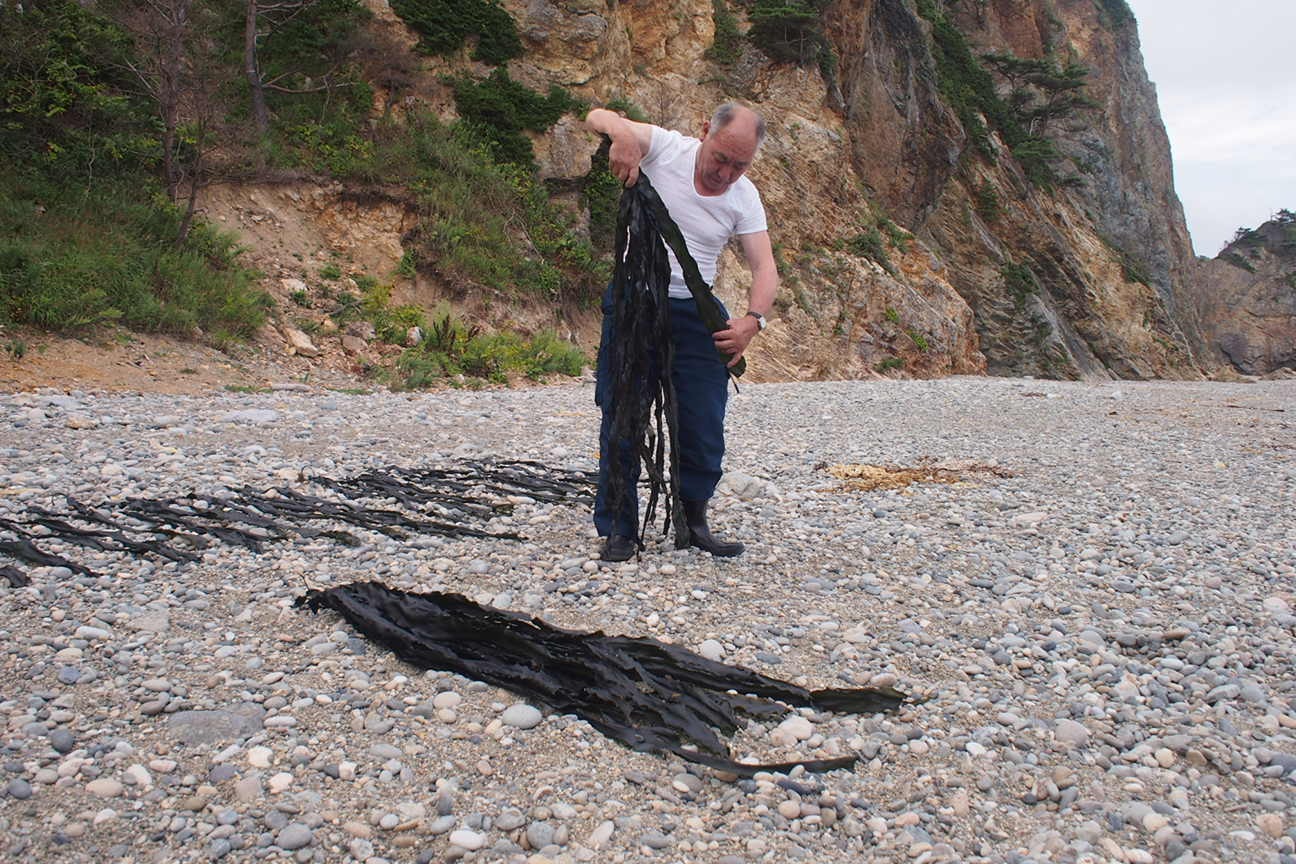
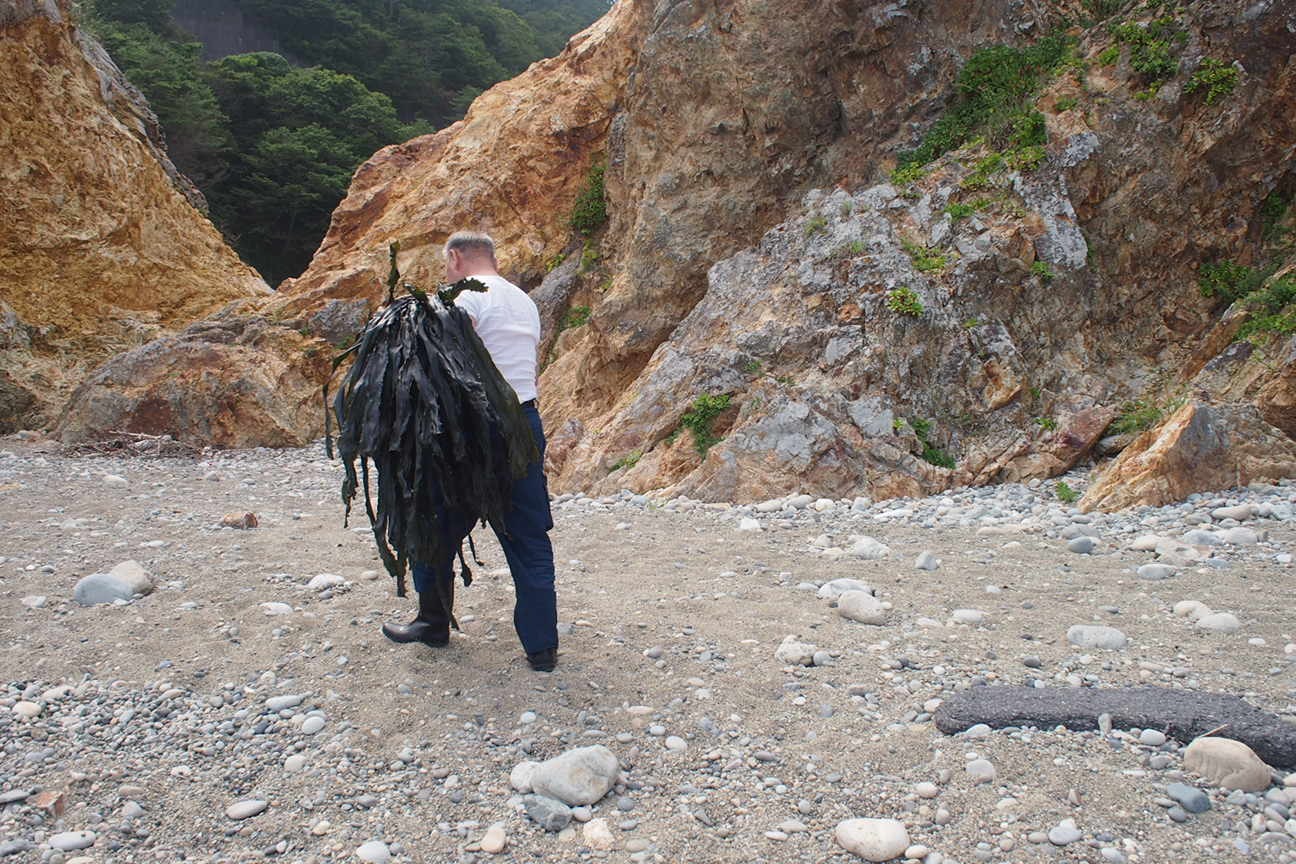
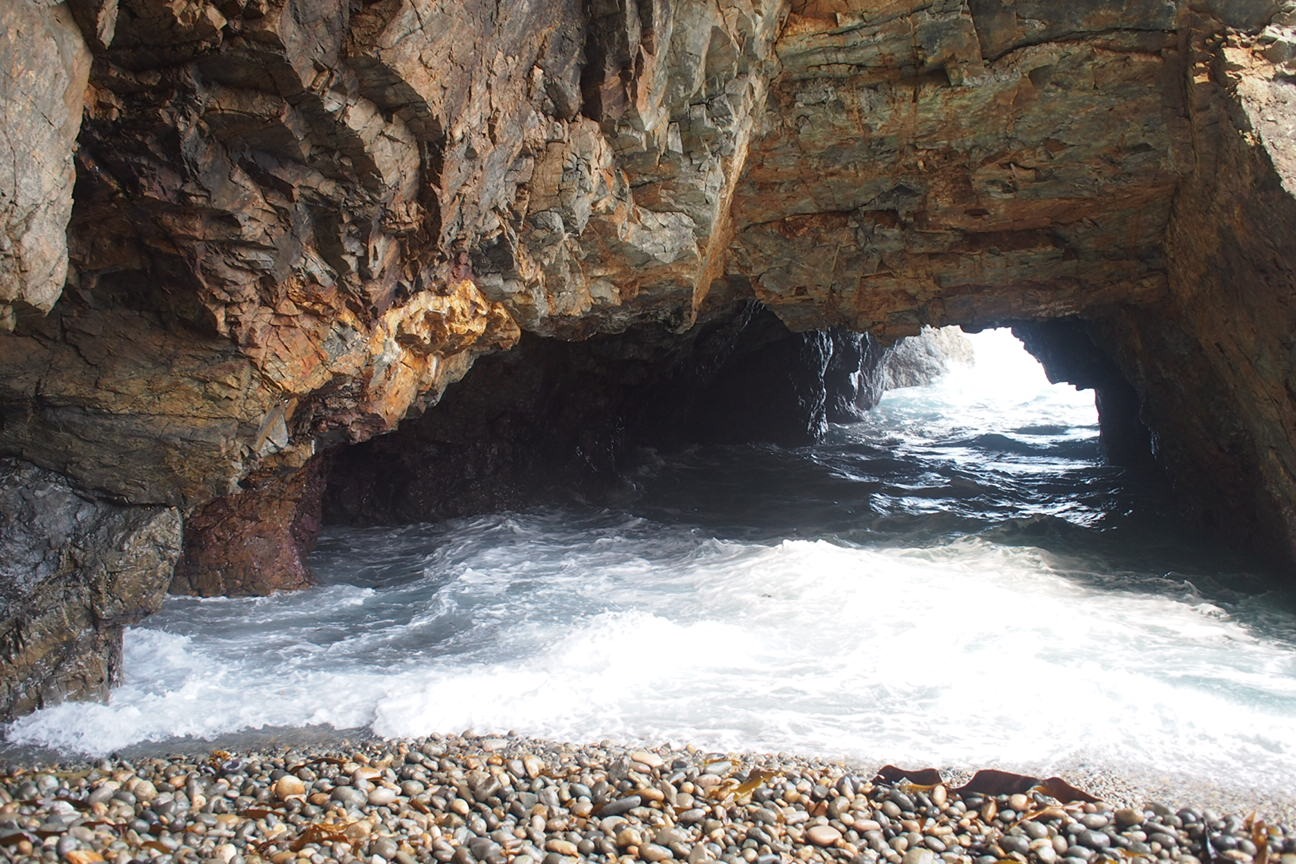
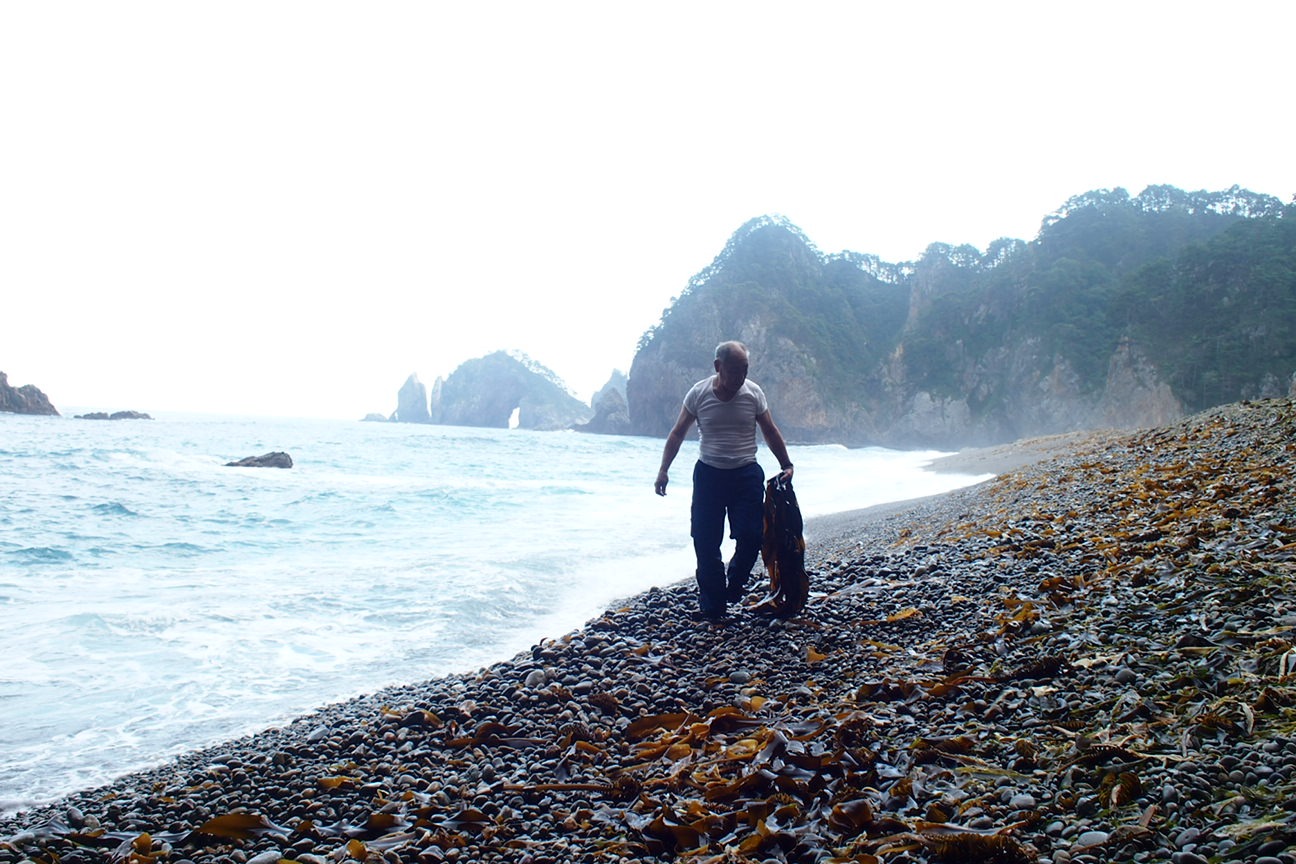
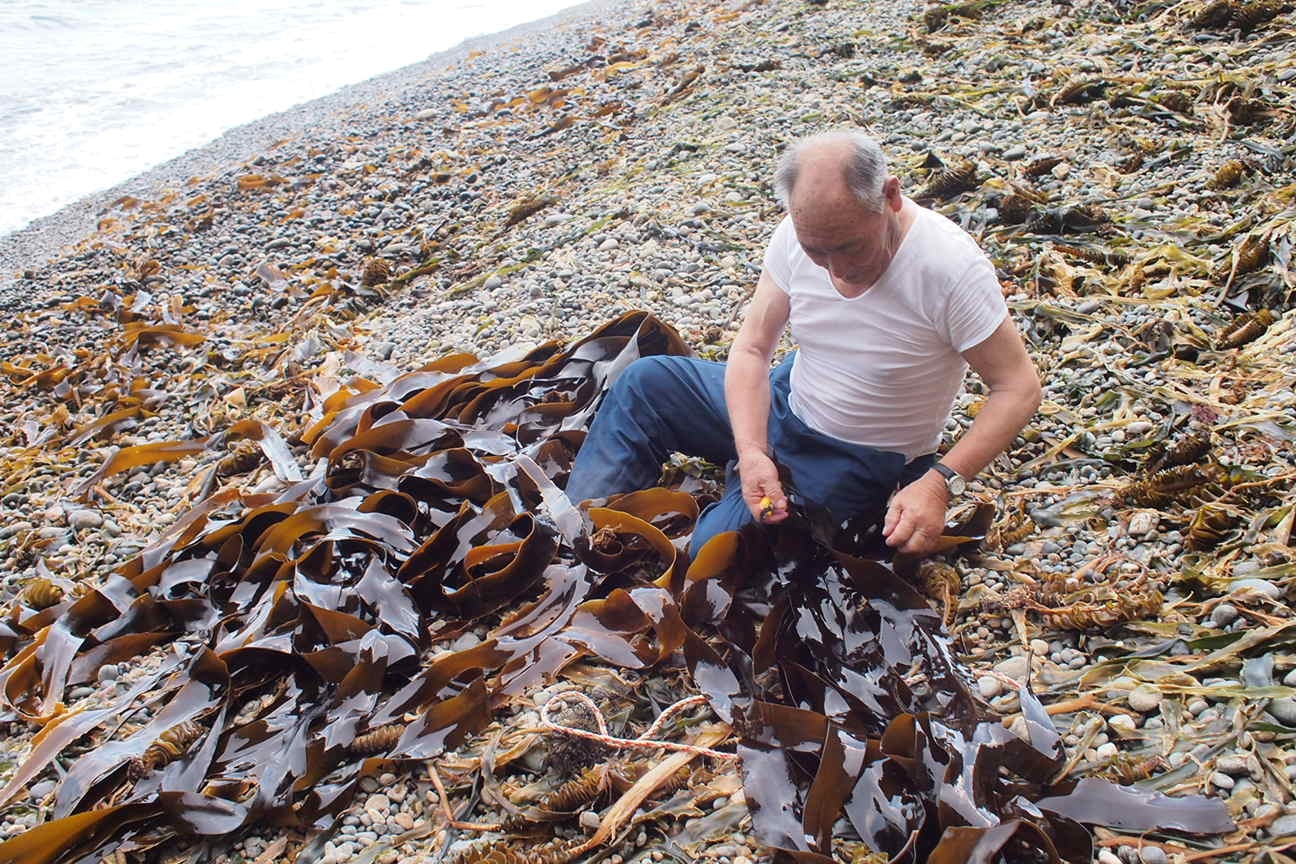
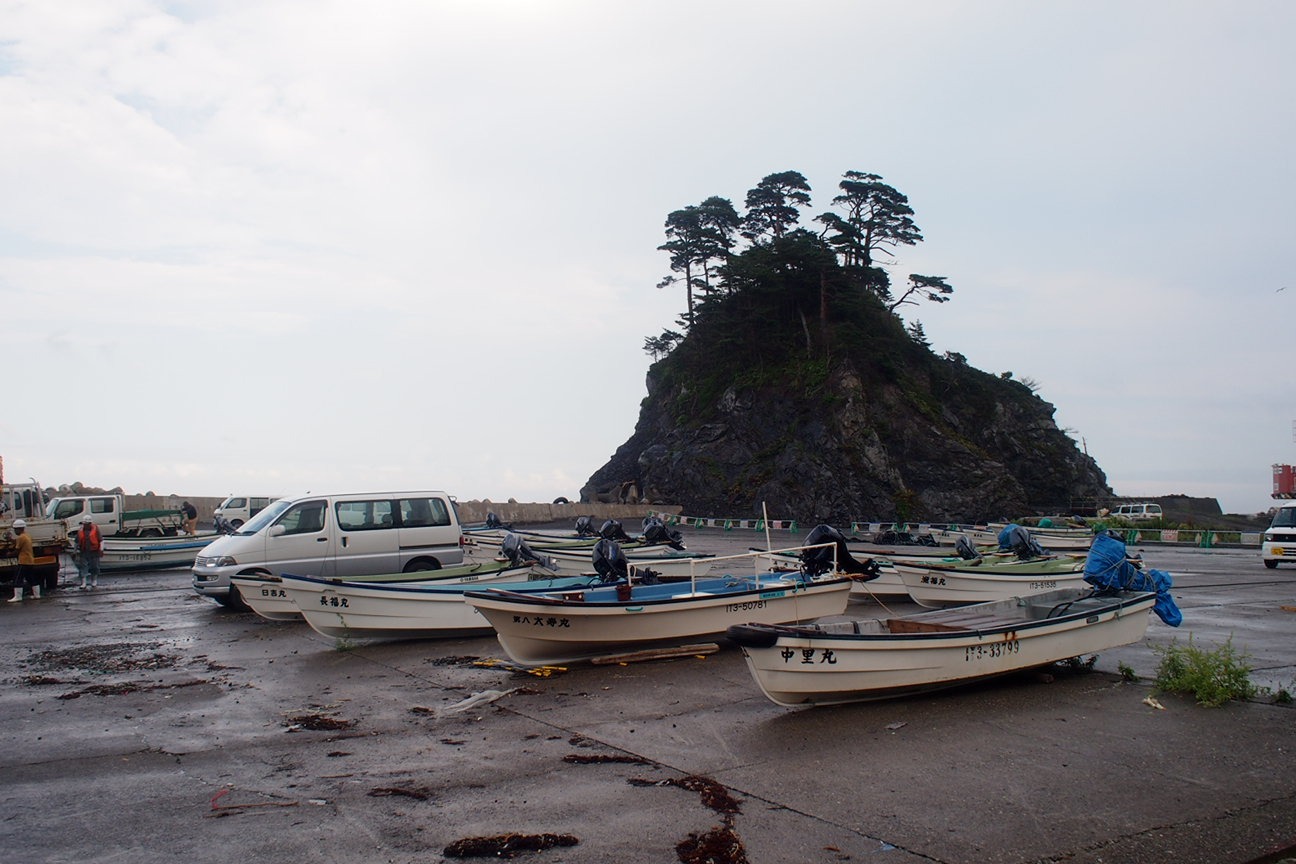
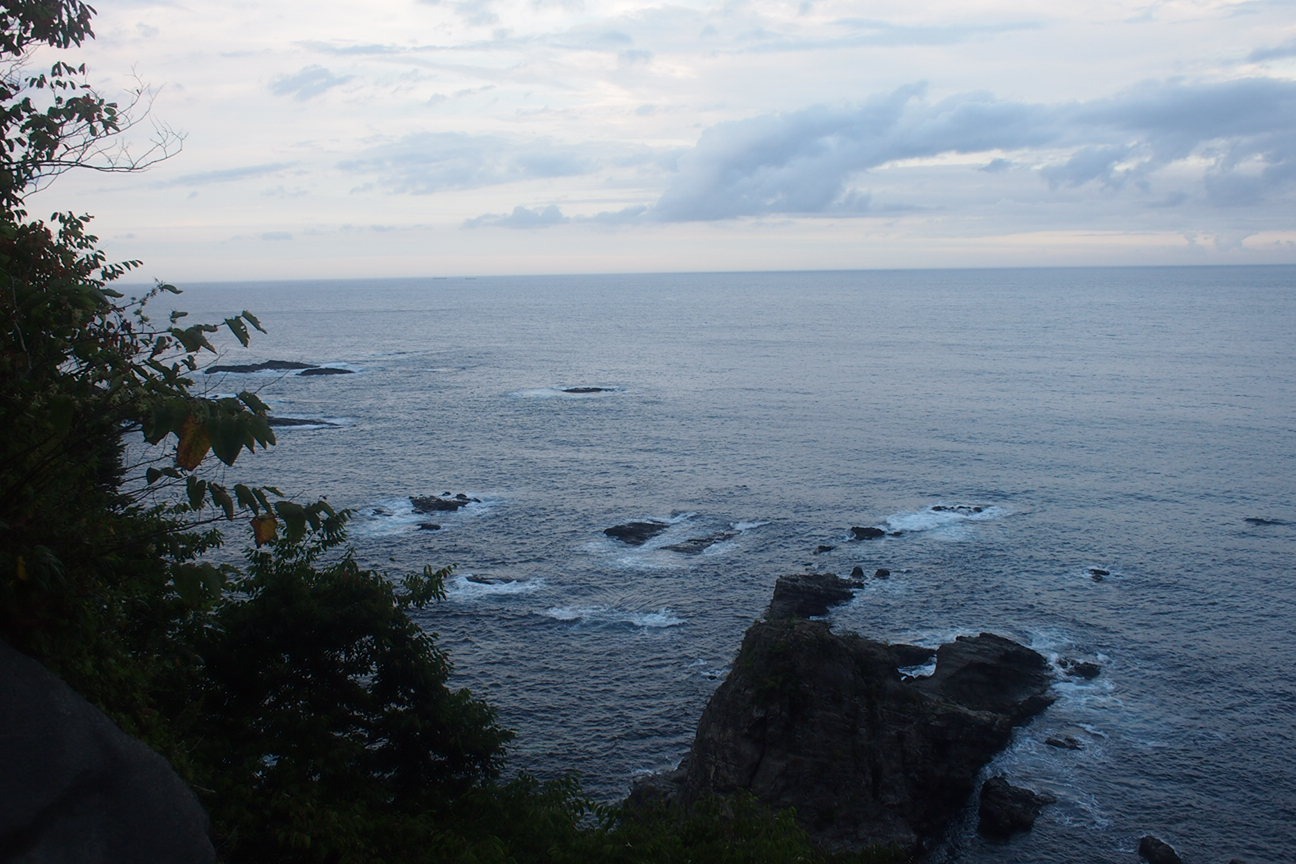
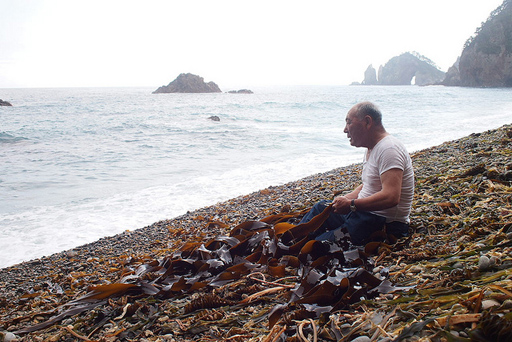
This is my third day in the tsunami zone, yesterday I spent more than an hour by the shore, watching and photographing. Like forbidden fruit is sweet, so this sea, capable of so much, is mesmerizing. While I was photographing and chatting with a fisherman collecting seaweed in the lagoon, clouds gathered in the rocks and rumbled a warning. An hour later it started pouring, which lasted all last night and continues now. Signs reading "Tsunami zone: beginning," "Tsunami zone: end" are placed all along the coast. Nevertheless, there's life and routine in these places. Residential houses, restaurants, shops.
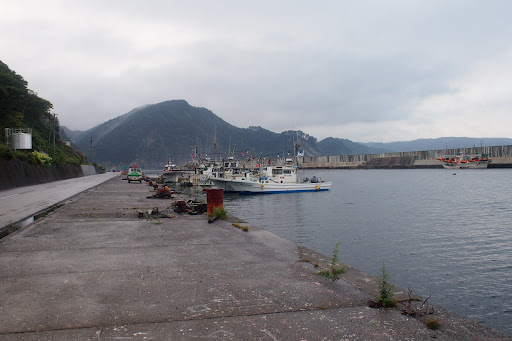
Fact: the crest length of storm waves doesn't exceed 100-200 meters, while tsunami crest length spreads across the entire coastline, which is thousands of kilometers.
Now I'm in the city of Miyako, doing laundry at a laundromat. Here I met the third person in these few days who told me he lost his house last spring.
— The wave was ten meters high. — he spoke with the excitement of a child who just saw an elephant at the zoo. I looked up. The three-meter ceiling prevented me from imagining what a ten-meter wave looks like.
Fact: tsunami typically generates not one, but several waves. The first wave, not necessarily the largest, wets the surface, reducing resistance for subsequent waves. In March 2011, a 40-meter high tsunami hit Japan's coast.
— What did you see? Were there fish? — I joked. — No, a ship. — he described how the ten-meter wave swept a ship into his house. — I managed to run away.
He and his wife still live in this city.
The rain stopped, and I rode on.