Continuation. Along the Sikoku Coast
AI TranslationI found Yoshi's kids very amusing. At dinner, the older one was shoving a toy in the boy's face with undisguised glee. Such a childish, unveiled, not yet overgrown with social habits display of jealousy and envy—amazing. Then she threw a tantrum because the little one took her toy cars, gathered them in a pile and, turning away from us, started playing in the corner. The parents barely react to this and, in my opinion, generally behave correctly—they don't baby-talk and don't react to tantrums.
"Kelly, how do you feel about kids?" "Oh, I adore them." "But you deliver babies every day, don't they get old? I mean, for you it's work." "No, I love babies."
As for me, teenagers are way more interesting—at least you can talk to them, and you need to know how to assert yourself. There's a project in Israel called Perach. For a certain fee (which goes toward tuition), students are assigned to families with children who for one reason or another aren't getting proper attention. I spent a year as a "big brother" to a ten-year-old kid, one of triplets—two boys and a girl. The girl had Down syndrome, so the parents devoted most of their time to her.
"Tomorrow I'm heading to Fukuoka, but first I'll stop by Hiroshima." Kelly had read some book as a child about a girl from Hiroshima who got leukemia after the bombing and eventually died. While they were trying to cure her, she made paper cranes.
I really hope Akina doesn't cook like this every day. Today I'm washing dishes and Kelly's drying. "Shouldn't the woman be washing dishes?"—I try to poke at her English-speaking feminism.
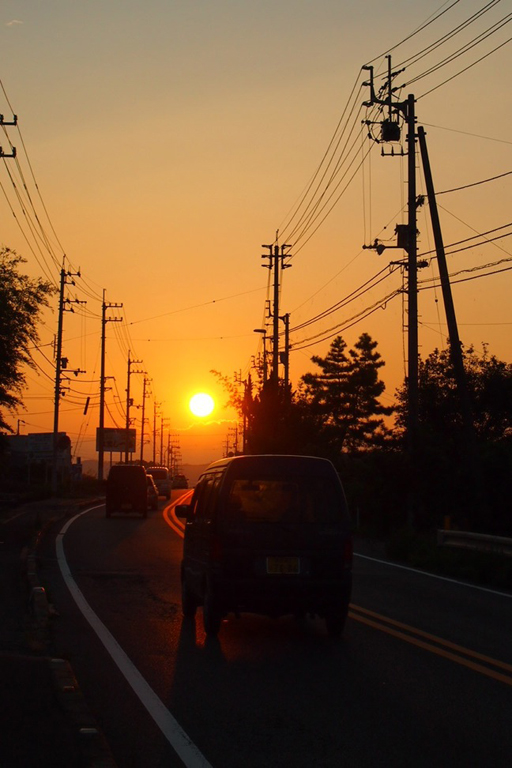
That night at the guesthouse there was only one free room, which we shared. When I woke up, she was already packing. The morning Bullet Train would get her to Fukuoka by the time I finish drinking my morning coffee—it'll take me two weeks to get there. Took a whole hour to get myself together to leave. Across the street to the sound of the traffic light, I go say goodbye to Yoshi (before morning coffee). There's some special feeling when after a couple days in the city you get back on the bike—I get a kick out of it. The road and views that constantly change have become my constant, not to say home. I know the entire inventory of roadside stores. 7-Eleven sells ice cream in a thin crepe, while Lawson has it in a real waffle cone covered in chocolate. I know where to charge batteries and how to run red lights without losing speed. Everything's familiar, like the light switch in the bathroom that you hit without looking. The worn saddle creaks again.
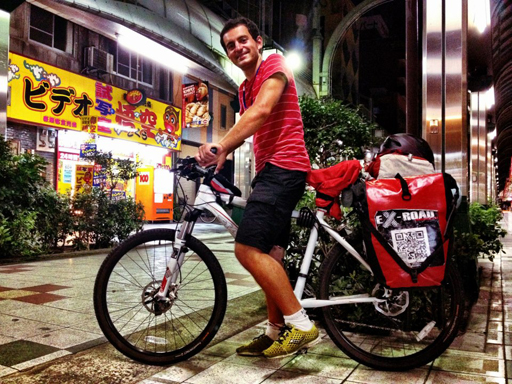
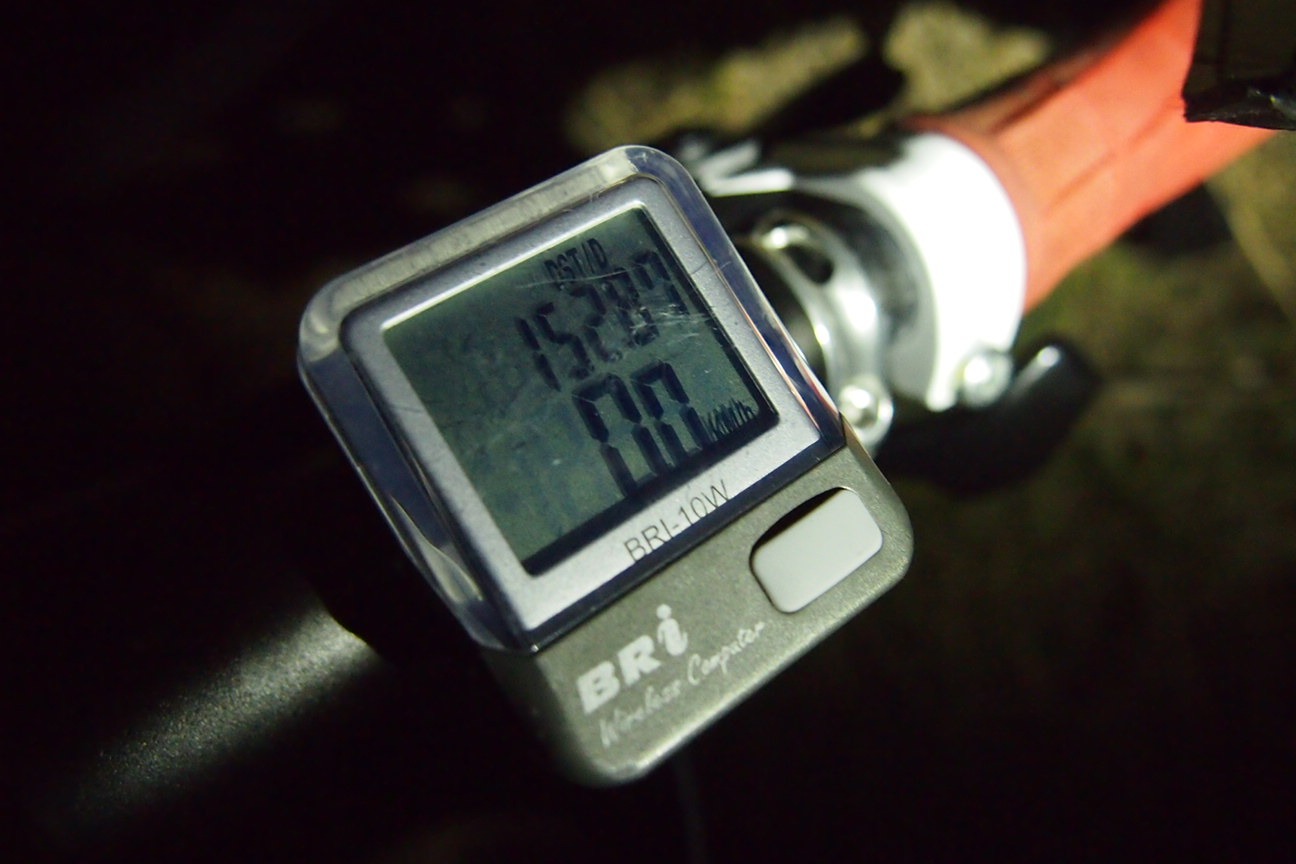
Morning coffee was at ten. Got a warm message from Kelly, and she also liked Hiroshima—liked the park and museum. That day I rode 152 kilometers and spent my last night on Shikoku at a golf course.
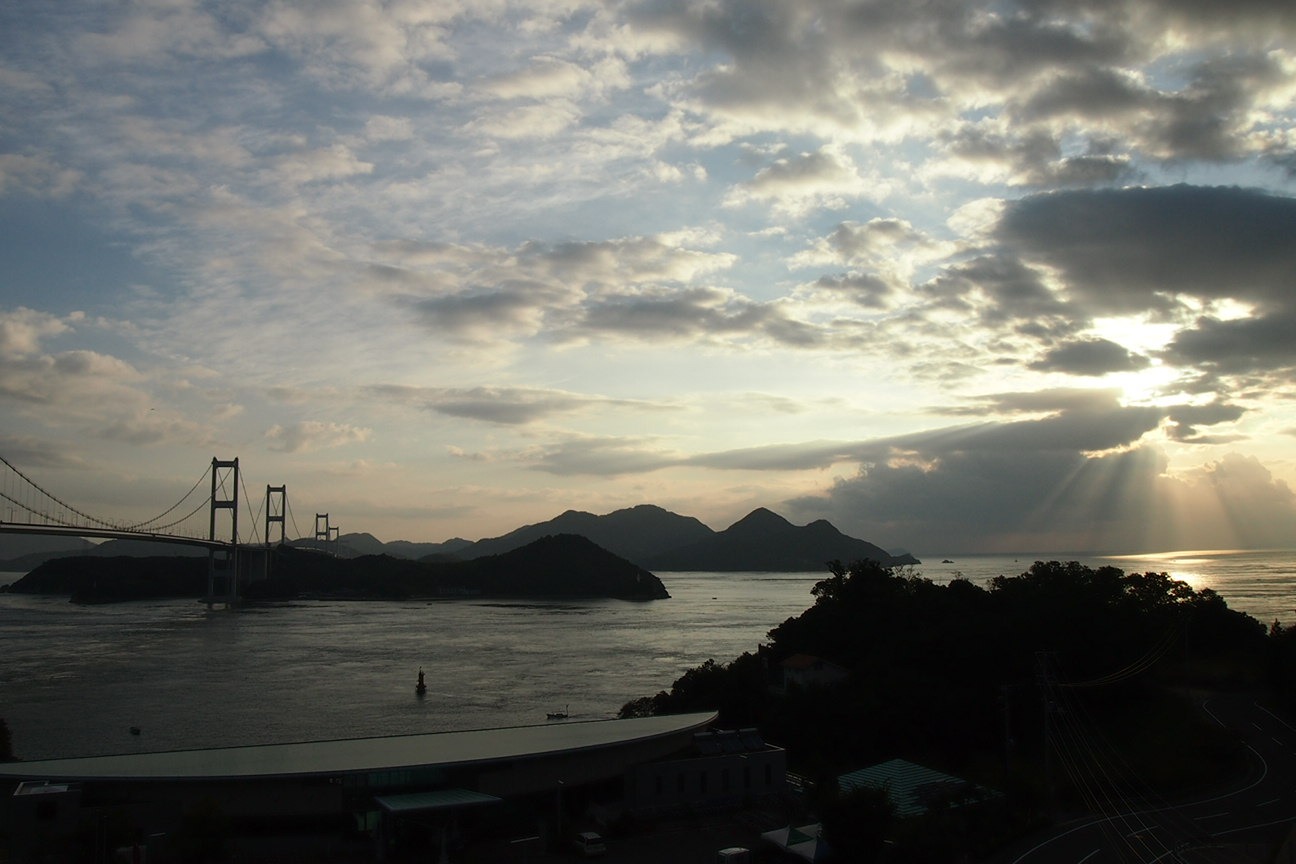
In the morning, the most exciting part of my route awaited me—the Shimanami Kaido bridge, connecting seven islands in the Inland Sea and being the only bridge between Shikoku and Honshu that allows bicycles.