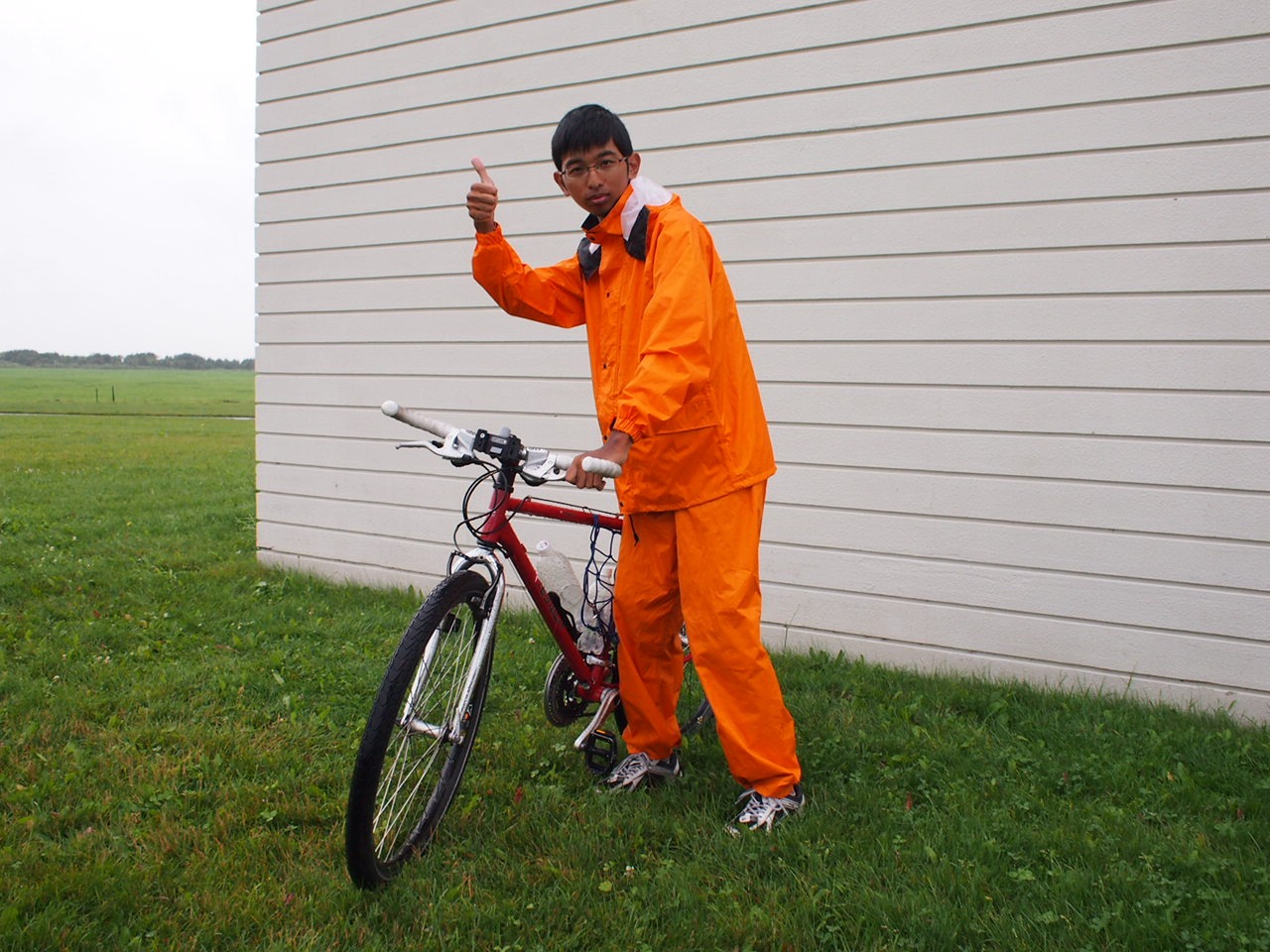
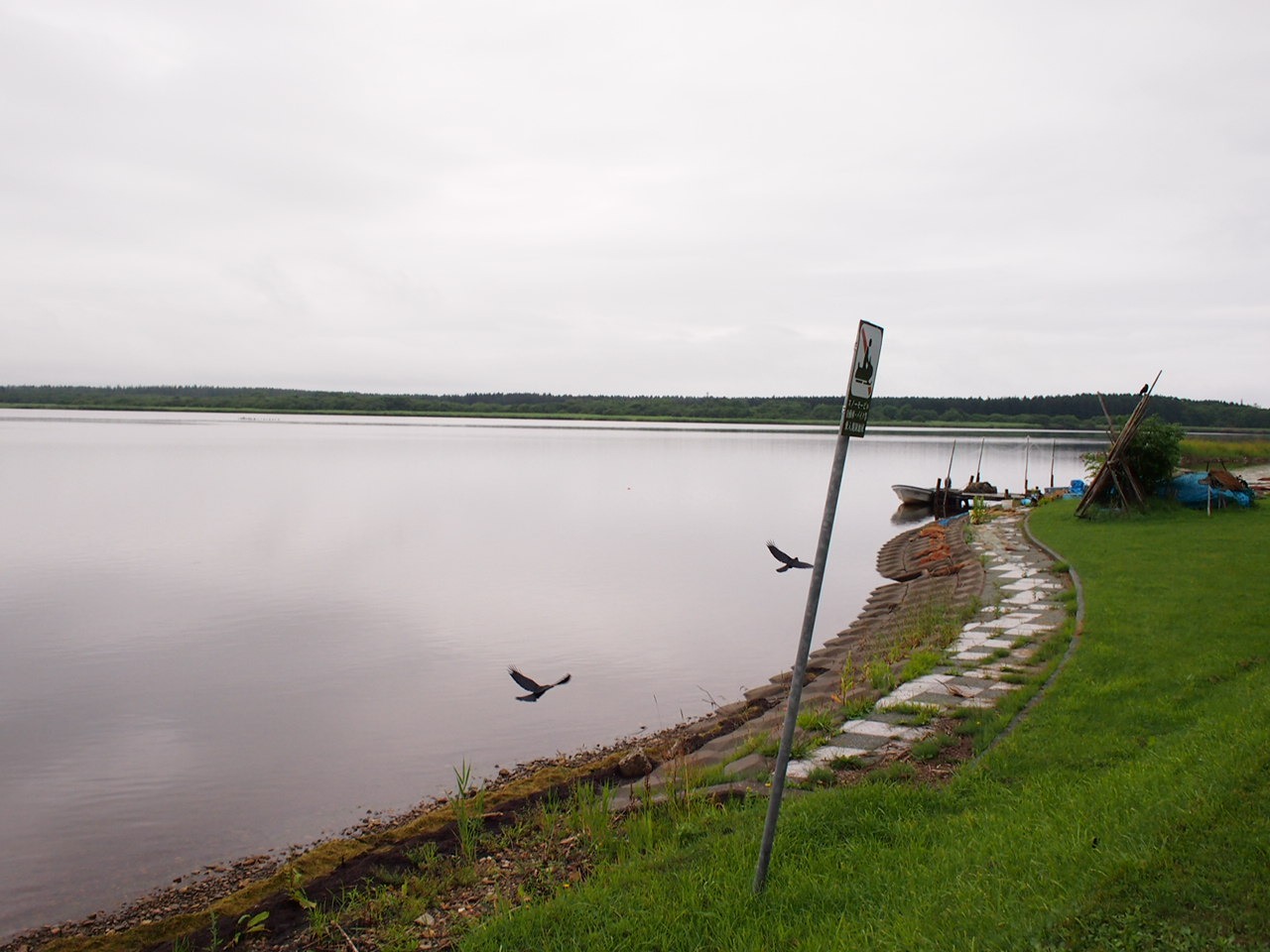
Onsen, rain, Japanese
AI TranslationOnsen admission costs 350 yen. You need to put money in the vending machine, get a ticket and immediately hand it to the person standing nearby. At the entrance to the changing room they take off their shoes. So I do too, take off my shoes, take them in my hands and put them on the shelf in a basket. First stage complete. I enter the changing room. Ok, here you need to undress completely, that's not difficult. Then I don't remember what they explained to me, I try to observe what the Japanese do. Inside the onsen there are four baths, and by the wall there's a step with basins and a shower positioned low at waist level. Everyone who came in with me sits on a stool and starts washing. I do the same, feeling the gaze of the "admissions committee" on me. Generally I'm hygienic, and I shower often, but the way they wash here is like cleaning an apartment before New Year. Ten minutes passed. Those who came in with me still haven't gotten up from their stools, I don't dare get up either. Washed between my toes for the second time, went over every nook and cranny, sitting there, remembering where else I can wash. I don't spare water or soap. Finally, the Japanese guy next to me got up, I looked at him like "a bit early there, buddy" and continued washing. Then I got up myself. I approach the hot bath filled with green water, sit down. Success.
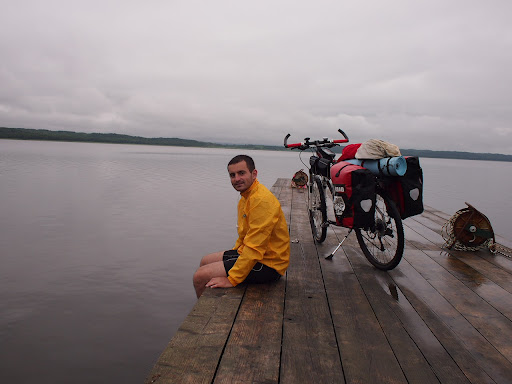
There's a sauna here, a bath with ice water, a bath with hot water and salts. The Japanese alternate ice water with sauna, I liked this idea too. But I still don't know how to jump steamed into cold water like that. I go in up to my knees and get ready, the Japanese laugh.
Announcement: Trading large towel for small one for onsen.
"And then it started raining...". Once, in school, I already borrowed this phrase from Hemingway. The teacher made me rewrite the essay. She said you can't start a narrative with "and then it started raining", you absolutely must write what happened before that. — Well, Hemingway wrote it. — When you become Hemingway, then do whatever you want, but a school essay needs to be written properly. Anyway, I went to sleep, and when I woke up, rain was pounding on the tent.
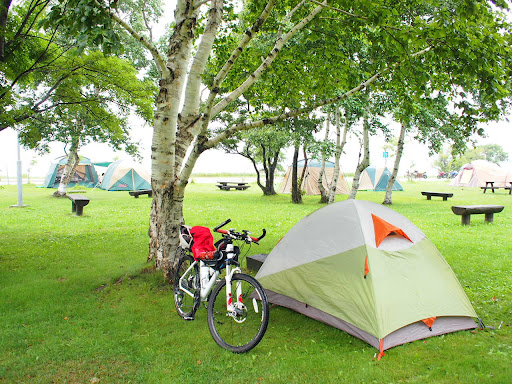
It wasn't heavy. Those small sparse drops with a hint of permanence. Nasty moisture gets everywhere. Into the tent, into boots... Everything seems wet. I lay in the tent until nine in the morning. Really didn't want to crawl out. But then the last bikers in the campground started their engines, cyclists began packing up, and being in this dampness and discomfort alone is doubly depressing. Had to pack up. Now I'm officially wet. Rain pours from above, and from below splashes fly from under the wheels. Like a car wash. Having reached the town of Hanatonbetsu, I went to buy food and bags for my feet. Without shoes it's warmer than in wet socks, sitting on a plastic beer crate, eating a banana, washing it down with coffee. The saleswoman brought out the 10 yen change that I forgot to take. Then she stuck her hand under her apron at her chest and pulled out a little bag of candy. — Arigato gozaimasu. — Kietekure. — apparently I looked that pitiful on my first day in the rain.
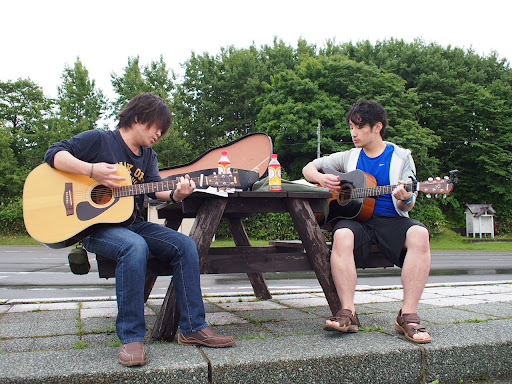
In the evening at the campground on Lake Kucharo, near the city of Hamatonbetsu, I wasn't asking about showers anymore, I was specifically interested in onsen, and when I learned that here too there was a chance to steam with naked men I felt happy. I'm becoming a real connoisseur of this business. There I met Kurashi, I think that's his name. He, like many others, started with the question "where are you from". Later he invited me to sit with him in the evening, motivating it by saying he really wanted to practice his English. After the onsen, a long conversation awaited me. Kurashi prepared Japanese rice and chicken necks for me over the fire. — Japanese rice is the most delicious. American is so-so. — What about Chinese, is it good? — No-o, Chinese is generally bad. The rice turned out to be really tasty. Never been much of a gourmet in this matter — can't say much about flavor nuances and aftertaste, but I'd never eaten anything like this.
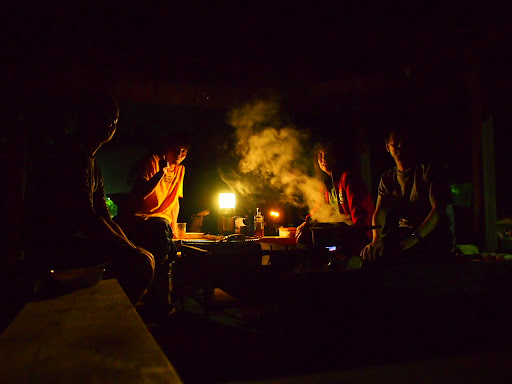
Kurashi told me about his work. At 50 years old he works as a sales manager at a chemical plant. Through photos on his phone he introduced me to their products. — Do you love your job? This question puzzled the Japanese man, he first looked at me with a slight smile, then brought his left ear closer and asked again: — Sorry, what? — Do you like your work? Then he realized he hadn't misheard and laughed at such an absurd question. — My job? Of course I like it! I love what I do.
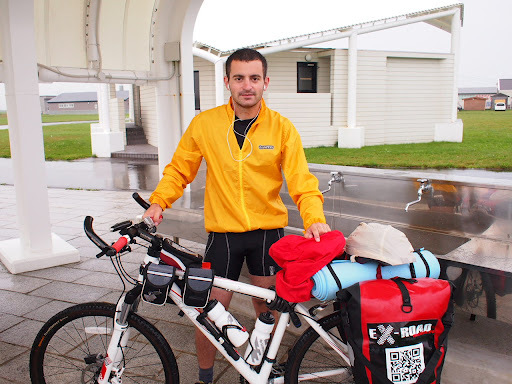
He told me that he travels by motorcycle and this hobby is really disliked by his wife. Now that his twin daughters have grown up, he decided to ride his motorcycle through Hokkaido. Then the conversation turned to weather and about how his own daughter doesn't like him. An old wisdom of hitchhiking travelers says: if all topics are exhausted and the conversation isn't flowing, you need to turn to the window, look thoughtfully at the road for two minutes, then turn to the driver and say "they've ruined the country!". In this case the conversation is guaranteed for at least another hour. To say about clean, beautiful Japan, as I had seen it until now, I couldn't bring myself to do it, so I simply decided to ask Kurashi about his attitude toward the government. Turns out, you can live in Japan and also not like the government. — They don't think about Japan's future at all, and are only concerned with how to win the next elections. Education in Japan also turned out to be worthless. Before saying goodbye Kurashi asked me to knock on his tent, in case I got up earlier, so we could say goodbye. In the morning the weather cleared up, but the wind was blowing. There were ripples on the lake. According to the map, somewhere nearby there's a tourist attraction — gold panning in the river using ancient methods.